


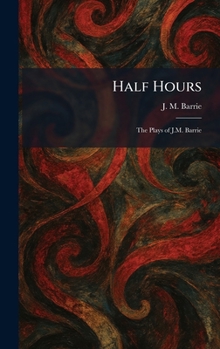
Half Hours: The Plays of J.M. Barrie

"Half Hours" is a compelling collection of four one-act plays by J. M. Barrie, a master of the stage whose work deftly balances whimsy with biting social observation. This volume includes the notable works "Pantaloon", "The Twelve-Pound Look", "Rosalind", and "The Will", each offering a distinct window into the human experience during the Edwardian era.
Barrie's theatrical genius is on full display as he moves between genres, from the theatrical fantasy of "Pantaloon" to the sharp, feminist-leaning social commentary found in "The Twelve-Pound Look". In "The Will", he explores the corrupting influence of material success over several decades, while "Rosalind" examines the artifice of youth and the reality of aging. Known for his ability to weave humor into tragic circumstances, Barrie uses these shorter formats to deliver punchy, impactful narratives that challenge the social norms of his time.
As a vital contribution to British dramatic literature, "Half Hours" remains a testament to Barrie's technical skill and his deep understanding of character. This collection is an essential read for those interested in the evolution of early 20th-century theater and the enduring legacy of one of literature's most inventive playwrights.
This work has been selected by scholars as being culturally important, and is part of the knowledge base of civilization as we know it. This work was reproduced from the original artifact, and remains as true to the original work as possible. Therefore, you may see the original copyright references, library stamps (as most of these works have been housed in our most important libraries around the world), and other notations in the work.
This work is in the public domain in the United States of America, and possibly other nations. Within the United States, you may freely copy and distribute this work, as no entity (individual or corporate) has a copyright on the body of the work.
As a reproduction of a historical artifact, this work may contain missing or blurred pages, poor pictures, errant marks, etc. Scholars believe, and we concur, that this work is important enough to be preserved, reproduced, and made generally available to the public. We appreciate your support of the preservation process, and thank you for being an important part of keeping this knowledge alive and relevant.
Related Subjects
DramaCustomer Reviews
ThriftBooks ® and the ThriftBooks ® logo are registered trademarks of Thrift Books Global, LLC
