


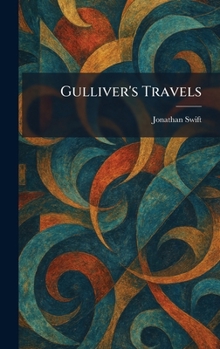
Gulliver's Travels

"Gulliver's Travels" is a seminal masterpiece of English literature and a profound work of social satire. Written by Jonathan Swift, the narrative follows Lemuel Gulliver, a ship's surgeon who embarks on a series of extraordinary voyages to remote and fantastical lands. From the tiny inhabitants of Lilliput to the giants of Brobdingnag, and from the flying island of Laputa to the noble Houyhnhnms, Gulliver encounters a diverse array of societies that serve as mirrors to human nature and the political landscapes of his time.
While often enjoyed as an imaginative adventure, the work is a biting critique of human folly, corruption, and the perceived superiority of human reason. Swift uses the travelogue format to explore universal themes of power, morality, and the inherent flaws of the human condition. This enduring classic remains a cornerstone of Western literature, offering readers both a thrilling journey and a sharp intellectual challenge. Through Gulliver's unique perspective, readers are invited to question their own societal norms and the contradictions of civilization.
This work has been selected by scholars as being culturally important, and is part of the knowledge base of civilization as we know it. This work was reproduced from the original artifact, and remains as true to the original work as possible. Therefore, you may see the original copyright references, library stamps (as most of these works have been housed in our most important libraries around the world), and other notations in the work.
This work is in the public domain in the United States of America, and possibly other nations. Within the United States, you may freely copy and distribute this work, as no entity (individual or corporate) has a copyright on the body of the work.
As a reproduction of a historical artifact, this work may contain missing or blurred pages, poor pictures, errant marks, etc. Scholars believe, and we concur, that this work is important enough to be preserved, reproduced, and made generally available to the public. We appreciate your support of the preservation process, and thank you for being an important part of keeping this knowledge alive and relevant.
Customer Reviews
ThriftBooks® and the ThriftBooks® logo are registered trademarks of Thrift Books Global, LLC
