


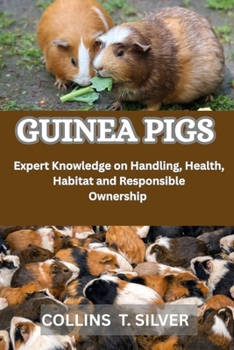
Guinea Pigs: Expert Knowledge on Handling, Health, Habitat, and responsible ownership
No Customer Reviews

Guinea pigs (Cavia porcellus), also known as cavies, have a long-standing relationship with humans that traces back over 3,000 years. Originating in the Andean region of South America, particularly modern-day Peru, Bolivia, Ecuador, and Colombia, they were domesticated by indigenous cultures such as the Inca for food and ceremonial use. Archaeological findings have uncovered guinea pig remains in human settlements, demonstrating their early integration into domestic life.
The domesticated guinea pig is believed to descend from the wild species Cavia tschudii, though they now differ significantly from their wild ancestors. European explorers and traders introduced guinea pigs to Europe in the 16th century, where they rapidly gained popularity as exotic pets among the aristocracy. The term "guinea pig" is thought to have originated from either their price ("one guinea") or the mistaken belief they came from Guinea.
Over time, guinea pigs became widely bred for companionship, biological research, and educational purposes. Today, they are globally recognized not only as household pets but also as important models in scientific study due to their docile nature, ease of breeding, and physiological similarities to humans in certain aspects.
The domesticated guinea pig is believed to descend from the wild species Cavia tschudii, though they now differ significantly from their wild ancestors. European explorers and traders introduced guinea pigs to Europe in the 16th century, where they rapidly gained popularity as exotic pets among the aristocracy. The term "guinea pig" is thought to have originated from either their price ("one guinea") or the mistaken belief they came from Guinea.
Over time, guinea pigs became widely bred for companionship, biological research, and educational purposes. Today, they are globally recognized not only as household pets but also as important models in scientific study due to their docile nature, ease of breeding, and physiological similarities to humans in certain aspects.
Format:Paperback
Language:English
ISBN:B0FHXPCCHQ
ISBN13:9798292750499
Release Date:July 2025
Publisher:Independently Published
Length:162 Pages
Weight:0.50 lbs.
Dimensions:0.3" x 6.0" x 9.0"
Customer Reviews
0 rating
Copyright © 2026 Thriftbooks.com
Terms of Use | Privacy Policy | Do Not Sell/Share My Personal Information | Cookie Notice | Cookie Preferences | Accessibility Statement
ThriftBooks ® and the ThriftBooks ® logo are registered trademarks of Thrift Books Global, LLC
ThriftBooks ® and the ThriftBooks ® logo are registered trademarks of Thrift Books Global, LLC
