


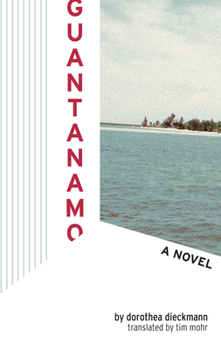
Guantanamo


Select Format
Select Condition 
Book Overview
At the beginning of the Afghan war, young Rashid, born in Hamburg to an Indian father and a German mother, travels to India to claim an inheritance. There, he befriends a young Afghan and continues his journey to Peshawar, where he ends up in the middle of an anti-American demonstration. He is arrested, handed over to the Americans, and taken to the notorious Guantanamo. What ensues is a remarkable literary experiment, a novel based on meticulous research. In six scenes, it describes Rashid's life at the camp. Sensitive yet utterly unsentimental, the novel explores the existential consequences of isolation, suppression, and uncertainty -- paralyzing fear, psychotic delusions, manic identification with fellow prisoners, and ultimately, resignation. Written with fierce moral clarity and a remarkable economy of expression, Guantanamo functions as both a political statement and a fascinating examination of the prisoner/jailer relationship.
Format:Paperback
Language:English
ISBN:1933368543
ISBN13:9781933368542
Release Date:March 2007
Publisher:Soft Skull
Length:160 Pages
Weight:0.40 lbs.
Dimensions:0.4" x 5.3" x 7.9"
Customer Reviews
2 ratings
An Excellent read!
Published by Thriftbooks.com User , 18 years ago
Definitely worth a read, if only to grasp the loss of self that accompanies relentless and prolonged dehumanisation.
Citizen of a Lonely Planet
Published by Thriftbooks.com User , 18 years ago
Rashid, a German tourist of Indian decent, using a Lonely Planet Guide to look for an adventure in the postwar zone of Afghanistan, finds himself rounded up by American soldiers under murky circumstances. The normally lucid handles of nationality and religion dissolve as Rashid finds himself bagged, tagged an enemy, and carted to a small cage stowed in rows alongside other cages filled with men with similar varied and confusing stories. Everyone imprisoned has been reduced to an enemy combatant. In turn, the male and female American soldiers who watch over them are also reduced to the role of interrogator. Like Beckett's Malone, this novel spends pages dwelling on the mesmerizing physical minutiae of the protagonist. He is a bundle of frayed nerves trying to cling to consciousness in a situation where any sense of context has been removed by senseless forces. In Beckett, this might be an existential crises, in Guantanomo this is Dick Cheney's war without end. Rashid watches sunlight. A gecko takes up residence behind a plywood panel. The gecko, too, is in prison, and the protagonist's imprisonment makes just as much sense. Increasingly, national boundaries only make sense for the larger multi-national structures like the World Bank. For citizens of the world, whether they are workers being detained in the United States for lacking the applicable administrative paperwork or they are tourists traveling for dubious reasons in Afghanistan it makes as much sense to imprison these people as it does to lock up geckos, spiders, and moths. This excellent short novel directly confronts the confusion of citizenship and identity in the context of Globalism where terrorism, war, or even Lonely Planet Guide tourism are not constrained by national boundaries.
Copyright © 2026 Thriftbooks.com Terms of Use
| Privacy Policy | Do Not
Sell/Share My Personal Information | Cookie Policy | Cookie Preferences | Accessibility Statement
ThriftBooks® and the ThriftBooks® logo are registered trademarks of Thrift Books Global, LLC
ThriftBooks® and the ThriftBooks® logo are registered trademarks of Thrift Books Global, LLC
