


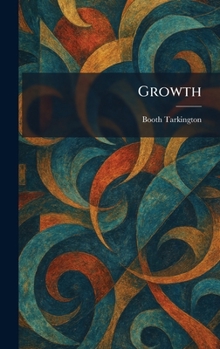
Growth

"Growth" is a sweeping literary triptych by the Pulitzer Prize-winning author Booth Tarkington that captures the profound transformation of the American landscape during the industrial revolution. Bringing together the novels "The Turmoil", "The Magnificent Ambersons", and "The National Avenue", this collection offers a definitive portrait of a Midwestern city as it evolves from a quiet, aristocratic town into a sprawling, smoke-filled metropolis.
Tarkington masterfully explores the human cost of progress, charting the rise and fall of prominent families against the backdrop of burgeoning industry and shifting social hierarchies. Through the lens of the Amberson and Sheridan families, the work examines the tension between old-world gentility and the relentless pursuit of commercial success. As the quiet streets give way to factories and automobiles, the characters must navigate a world where tradition is sacrificed for expansion.
Celebrated for its keen social observation and rich characterization, "Growth" remains a vital chronicle of the Gilded Age and the birth of the modern American city. It is an essential work for readers interested in family sagas, historical fiction, and the cultural history of the United States, providing a nuanced perspective on the ambitions and sacrifices that defined a nation's development.
This work has been selected by scholars as being culturally important, and is part of the knowledge base of civilization as we know it. This work was reproduced from the original artifact, and remains as true to the original work as possible. Therefore, you may see the original copyright references, library stamps (as most of these works have been housed in our most important libraries around the world), and other notations in the work.
This work is in the public domain in the United States of America, and possibly other nations. Within the United States, you may freely copy and distribute this work, as no entity (individual or corporate) has a copyright on the body of the work.
As a reproduction of a historical artifact, this work may contain missing or blurred pages, poor pictures, errant marks, etc. Scholars believe, and we concur, that this work is important enough to be preserved, reproduced, and made generally available to the public. We appreciate your support of the preservation process, and thank you for being an important part of keeping this knowledge alive and relevant.
Customer Reviews
ThriftBooks® and the ThriftBooks® logo are registered trademarks of Thrift Books Global, LLC
