


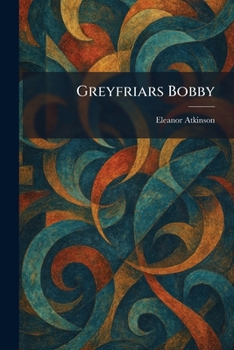
Greyfriars Bobby

"Greyfriars Bobby" is a poignant and enduring classic that tells the legendary story of a small Skye Terrier whose unwavering loyalty captured the heart of Edinburgh. Based on a true historical account, the narrative follows Bobby, the devoted companion of a shepherd known as Auld Jock. After his master's death, the faithful dog refuses to be parted from him, spending the next fourteen years guarding Jock's grave in Greyfriars Kirkyard.
Set against the atmospheric backdrop of mid-19th century Scotland, the story explores themes of friendship, perseverance, and the profound bond between humans and animals. Eleanor Atkinson's evocative prose brings to life the cobblestone streets of old Edinburgh and the various local characters-from the compassionate groundskeeper to the city's children-who eventually come to cherish and protect the little dog. Bobby's steadfast presence becomes a symbol of devotion that transcends social boundaries and touches the entire community.
This moving tale remains one of the most beloved animal stories in literature, celebrating a legacy of fidelity that is still honored today. It is an essential read for animal lovers and readers of historical fiction seeking a story that captures the true spirit of devotion.
This work has been selected by scholars as being culturally important, and is part of the knowledge base of civilization as we know it. This work was reproduced from the original artifact, and remains as true to the original work as possible. Therefore, you may see the original copyright references, library stamps (as most of these works have been housed in our most important libraries around the world), and other notations in the work.
This work is in the public domain in the United States of America, and possibly other nations. Within the United States, you may freely copy and distribute this work, as no entity (individual or corporate) has a copyright on the body of the work.
As a reproduction of a historical artifact, this work may contain missing or blurred pages, poor pictures, errant marks, etc. Scholars believe, and we concur, that this work is important enough to be preserved, reproduced, and made generally available to the public. We appreciate your support of the preservation process, and thank you for being an important part of keeping this knowledge alive and relevant.
Customer Reviews
ThriftBooks ® and the ThriftBooks ® logo are registered trademarks of Thrift Books Global, LLC
