


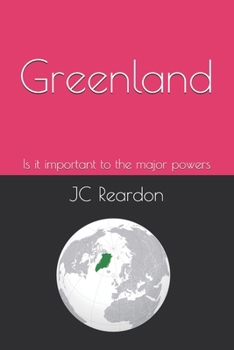
Greenland: Is it important to the major powers
No Customer Reviews

Greenland is the world's largest island, located between the Arctic and Atlantic Oceans, east of Canada and northwest of Iceland. It's an autonomous territory of Denmark, though it has its own government. About 80% of Greenland is covered by ice, making it one of the least densely populated places on Earth.
Quick Facts: Capital: NuukPopulation: 56,000 (mostly Inuit)Official Language: Greenlandic (Kalaallisut), but Danish and English are also spokenClimate: Arctic and subarctic Natural Resources in Greenland
Despite its icy landscape, Greenland has rich natural resources. Some of the most important ones include:
1. Minerals & Metals
Greenland has a variety of valuable minerals, including: Rare Earth Elements (REEs) - Used in electronics, batteries, and renewable energy tech.Uranium - Potential for nuclear energy production.Iron Ore, Zinc, and Lead - Found in several locations.Gold and Platinum - Limited mining operations exist.2. Oil & GasGreenland is believed to have large offshore oil and gas reserves, but harsh Arctic conditions make extraction difficult.Several exploration projects have started but face environmental and economic challenges.3. Fishing Industry
Quick Facts: Capital: NuukPopulation: 56,000 (mostly Inuit)Official Language: Greenlandic (Kalaallisut), but Danish and English are also spokenClimate: Arctic and subarctic Natural Resources in Greenland
Despite its icy landscape, Greenland has rich natural resources. Some of the most important ones include:
1. Minerals & Metals
Greenland has a variety of valuable minerals, including: Rare Earth Elements (REEs) - Used in electronics, batteries, and renewable energy tech.Uranium - Potential for nuclear energy production.Iron Ore, Zinc, and Lead - Found in several locations.Gold and Platinum - Limited mining operations exist.2. Oil & GasGreenland is believed to have large offshore oil and gas reserves, but harsh Arctic conditions make extraction difficult.Several exploration projects have started but face environmental and economic challenges.3. Fishing Industry
Format:Paperback
Language:English
ISBN:B0F3JS2T3H
ISBN13:9798316563654
Release Date:April 2025
Publisher:Independently Published
Length:268 Pages
Weight:0.80 lbs.
Dimensions:0.6" x 6.0" x 9.0"
Related Subjects
HistoryCustomer Reviews
0 rating
Copyright © 2026 Thriftbooks.com
Terms of Use | Privacy Policy | Do Not Sell/Share My Personal Information | Cookie Policy | Cookie Preferences | Accessibility Statement
ThriftBooks ® and the ThriftBooks ® logo are registered trademarks of Thrift Books Global, LLC
ThriftBooks ® and the ThriftBooks ® logo are registered trademarks of Thrift Books Global, LLC
