


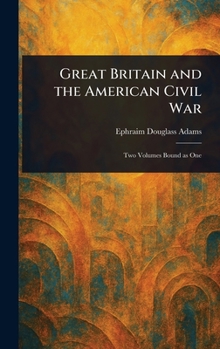
Great Britain and the American Civil War

Ephraim Douglass Adams's "Great Britain and the American Civil War" offers a detailed examination of the complex relationship between Great Britain and the United States during one of America's most tumultuous periods. This historical text delves into the intricacies of foreign relations and diplomacy as the American Civil War unfolded.
Explore the critical decisions and international pressures that shaped Great Britain's stance toward the Union and the Confederacy. Adams meticulously analyzes the political, economic, and social factors influencing British policy, shedding light on a crucial aspect of the American Civil War era. A valuable resource for students and enthusiasts of American history, international relations, and the history of Great Britain, this book provides a comprehensive understanding of a pivotal moment in global affairs. Discover the nuances of foreign policy and the enduring impact of the Civil War on the world stage.This work has been selected by scholars as being culturally important, and is part of the knowledge base of civilization as we know it.
This work is in the public domain in the United States of America, and possibly other nations. Within the United States, you may freely copy and distribute this work, as no entity (individual or corporate) has a copyright on the body of the work.
Scholars believe, and we concur, that this work is important enough to be preserved, reproduced, and made generally available to the public. We appreciate your support of the preservation process, and thank you for being an important part of keeping this knowledge alive and relevant.
Customer Reviews
ThriftBooks ® and the ThriftBooks ® logo are registered trademarks of Thrift Books Global, LLC
