


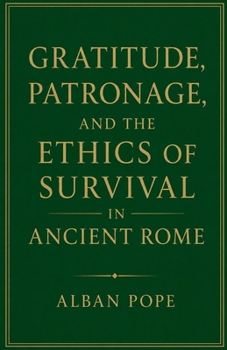
Gratitude, Patronage, and the Ethics of Survival in Ancient Rome

Gratitude in the Roman world was never merely a private sentiment, nor was patronage simply a social arrangement between individuals of unequal status. Together, they formed a moral, political, and economic architecture that shaped the lived experience of Romans across centuries. To speak of gratia, beneficium, and officium is to enter a conceptual universe in which emotions, obligations, and survival strategies were inseparable. The Romans themselves understood this interdependence with remarkable clarity. Cicero, Seneca, and a host of other writers treated gratitude not as a fleeting feeling but as a civic virtue, a stabilizing force, and at times a dangerous weapon. Patronage, in turn, was not a peripheral institution but a central mechanism through which power circulated, resources were distributed, and identities were negotiated. This book explores the intricate interplay between gratitude, patronage, and the ethics of survival in ancient Rome, tracing how these forces shaped the social fabric from the Republic to Late Antiquity.
Customer Reviews
ThriftBooks ® and the ThriftBooks ® logo are registered trademarks of Thrift Books Global, LLC
