


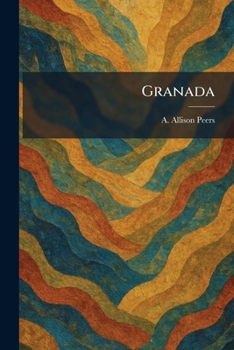
Granada

"Granada" is a profound and evocative exploration of one of Spain's most storied cities. Written by the esteemed Hispanist A. Allison Peers, this work captures the unique essence of Granada, bridging the gap between its illustrious Moorish past and its vibrant cultural present. The narrative guides readers through the majestic halls of the Alhambra, the lush terraces of the Generalife, and the historic labyrinth of the Albaic -n district.
Peers provides a detailed examination of the city's architectural masterpieces and its significant role in the history of the Iberian Peninsula. The work delves into the legacy of the Nasrid dynasty, the impact of the Reconquista, and the enduring beauty of the Andalusian landscape. With a scholar's precision and a traveler's passion, the author brings to life the legends and historical milestones that have shaped Granada into a symbol of cultural fusion. This book serves as an essential companion for anyone seeking to understand the historical depth and poetic allure of the "city of the pomegranate," offering a timeless perspective on its monuments, traditions, and spiritual atmosphere.
This work has been selected by scholars as being culturally important, and is part of the knowledge base of civilization as we know it. This work was reproduced from the original artifact, and remains as true to the original work as possible. Therefore, you may see the original copyright references, library stamps (as most of these works have been housed in our most important libraries around the world), and other notations in the work.
This work is in the public domain in the United States of America, and possibly other nations. Within the United States, you may freely copy and distribute this work, as no entity (individual or corporate) has a copyright on the body of the work.
As a reproduction of a historical artifact, this work may contain missing or blurred pages, poor pictures, errant marks, etc. Scholars believe, and we concur, that this work is important enough to be preserved, reproduced, and made generally available to the public. We appreciate your support of the preservation process, and thank you for being an important part of keeping this knowledge alive and relevant.
Customer Reviews
ThriftBooks ® and the ThriftBooks ® logo are registered trademarks of Thrift Books Global, LLC
