


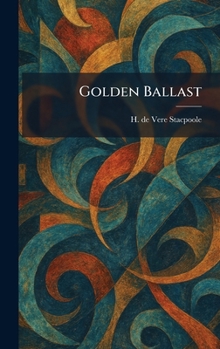
Golden Ballast

"Golden Ballast" is a compelling maritime adventure and mystery that showcases H. de Vere Stacpoole's mastery of nautical storytelling. The narrative follows a group of characters who make a startling discovery aboard a small vessel: the ballast keeping their ship upright is not lead or stone, but solid gold. This revelation transforms a simple voyage into a high-stakes drama of concealment, greed, and survival.
As the protagonists navigate both the physical dangers of the sea and the psychological pressure of possessing immense, illicit wealth, Stacpoole weaves a tale rich in atmosphere and suspense. Known for his ability to transport readers to exotic locales and the open ocean, the author provides a detailed and authentic look at early 20th-century sailing life. The work explores themes of integrity and the corrupting influence of sudden fortune, blending the traditional sea story with the elements of a classic thriller. "Golden Ballast" stands as a significant work in the adventure genre, offering a vivid exploration of human nature under the unique pressures of life on the waves.
This work has been selected by scholars as being culturally important, and is part of the knowledge base of civilization as we know it. This work was reproduced from the original artifact, and remains as true to the original work as possible. Therefore, you may see the original copyright references, library stamps (as most of these works have been housed in our most important libraries around the world), and other notations in the work.
This work is in the public domain in the United States of America, and possibly other nations. Within the United States, you may freely copy and distribute this work, as no entity (individual or corporate) has a copyright on the body of the work.
As a reproduction of a historical artifact, this work may contain missing or blurred pages, poor pictures, errant marks, etc. Scholars believe, and we concur, that this work is important enough to be preserved, reproduced, and made generally available to the public. We appreciate your support of the preservation process, and thank you for being an important part of keeping this knowledge alive and relevant.
Customer Reviews
ThriftBooks ® and the ThriftBooks ® logo are registered trademarks of Thrift Books Global, LLC
