


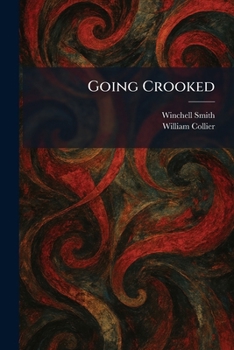
Going Crooked

Select Format
Select Condition 
Book Overview
"Going Crooked" is a compelling comedy-drama written by the renowned theatrical collaborators Winchell Smith and William Collier. This classic stage play explores themes of redemption, deception, and the allure of the criminal life during the early 20th century. The plot centers on characters navigating the fine line between law-abiding citizenship and the underworld, blending suspenseful situations with the witty dialogue characteristic of the era's best popular entertainment.
The work stands as a testament to the craft of American playwriting in the 1920s, showcasing a sophisticated balance of tension and humor. As the protagonists struggle with their pasts and the consequences of "going crooked," the audience is treated to a series of clever twists and character-driven moments. Smith and Collier excel at depicting the social mores and moral dilemmas of their time, making this play a significant piece of theatrical history.
Ideal for students of American drama and fans of vintage crime stories, "Going Crooked" offers a window into the evolution of the crime-comedy genre on the Broadway stage. Its sharp structure and engaging narrative ensure its continued relevance as a study of human nature and theatrical storytelling.
This work has been selected by scholars as being culturally important, and is part of the knowledge base of civilization as we know it. This work was reproduced from the original artifact, and remains as true to the original work as possible. Therefore, you may see the original copyright references, library stamps (as most of these works have been housed in our most important libraries around the world), and other notations in the work.
This work is in the public domain in the United States of America, and possibly other nations. Within the United States, you may freely copy and distribute this work, as no entity (individual or corporate) has a copyright on the body of the work.
As a reproduction of a historical artifact, this work may contain missing or blurred pages, poor pictures, errant marks, etc. Scholars believe, and we concur, that this work is important enough to be preserved, reproduced, and made generally available to the public. We appreciate your support of the preservation process, and thank you for being an important part of keeping this knowledge alive and relevant.
Related Subjects
DramaCustomer Reviews
ThriftBooks ® and the ThriftBooks ® logo are registered trademarks of Thrift Books Global, LLC
