


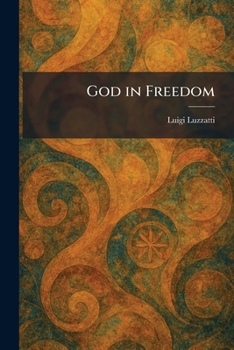
God in Freedom

Select Format
Select Condition 
Book Overview
"God in Freedom" is a profound exploration of religious liberty and the intricate relationship between conscience and the state. Written by the distinguished Italian statesman and scholar Luigi Luzzatti, this work serves as a comprehensive historical and philosophical inquiry into the evolution of religious tolerance across different civilizations and legal systems. Luzzatti examines how various nations have navigated the tension between secular authority and spiritual conviction, arguing passionately for a universal recognition of freedom of conscience as a fundamental human right.
The text delves into the legal frameworks and moral arguments that have shaped the modern understanding of religious pluralism. By analyzing the successes and failures of past regimes, the author provides a compelling vision for a society where diverse faiths can coexist under the protection of a just and neutral state. Intellectual in scope yet deeply rooted in the practical realities of governance, "God in Freedom" remains a significant contribution to the fields of political science, law, and theology. It offers timeless insights into the challenges of maintaining social harmony while honoring individual belief, making it an essential read for those interested in the history of civil liberties and the ongoing dialogue between faith and freedom.
This work has been selected by scholars as being culturally important, and is part of the knowledge base of civilization as we know it. This work was reproduced from the original artifact, and remains as true to the original work as possible. Therefore, you may see the original copyright references, library stamps (as most of these works have been housed in our most important libraries around the world), and other notations in the work.
This work is in the public domain in the United States of America, and possibly other nations. Within the United States, you may freely copy and distribute this work, as no entity (individual or corporate) has a copyright on the body of the work.
As a reproduction of a historical artifact, this work may contain missing or blurred pages, poor pictures, errant marks, etc. Scholars believe, and we concur, that this work is important enough to be preserved, reproduced, and made generally available to the public. We appreciate your support of the preservation process, and thank you for being an important part of keeping this knowledge alive and relevant.
Related Subjects
Philosophy Political Science Politics & Social Sciences Religion Religion & SpiritualityCustomer Reviews
ThriftBooks ® and the ThriftBooks ® logo are registered trademarks of Thrift Books Global, LLC
