


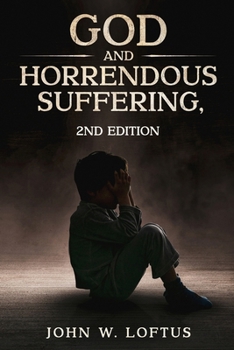
God and Horrendous Suffering, 2nd Ed.

This is an anthology written by scholars and experts on horrendous suffering given an all-good, all-knowing and all-powerful God. It seeks to help readers understand the problem by discussing this issue philosophically, theologically, apologetically, biblically, religiously, and personally. It's an excellent model for how philosophers, apologists, and theologians should discuss this problem.The problem addressed in the book is expressed as follows: If there's a theistic God, one who is omnibenevolent (or perfectly good), omniscient (or all-knowing), and omnipotent (or all-powerful), the issue of why there is horrendous suffering in the world requires an explanation. The reason is that a perfectly good God would want to eliminate it, an all-knowing God would know how to eliminate it, and an all-powerful God would be able to eliminate it. So the extent of horrendous suffering means that either God does not care enough to eliminate it, or God is not smart enough to eliminate it, or God is not powerful enough to eliminate it. The stubborn fact of horrendous suffering means something is wrong with God's goodness, his knowledge, or his ability.It begins with a debate John Loftus had with Don McIntosh about horrendous suffering. The evidential problem of horrendous suffering is its focus, with a chapter on the logical problem of evil (by Dr. James Sterba) and the emotional problem of evil by Loftus.
Customer Reviews
ThriftBooks® and the ThriftBooks® logo are registered trademarks of Thrift Books Global, LLC
