
Skip to content
Scan a barcode
Scan
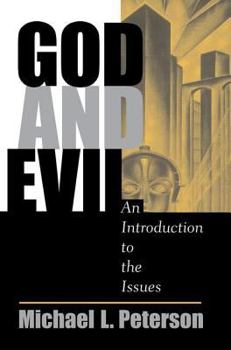
Paperback God And Evil: An Introduction To The Issues Book

ISBN: 0813328497

ISBN13: 9780813328492

God And Evil: An Introduction To The Issues

Select Format

Select Condition ThriftBooks Help Icon

Recommended

Format: Paperback

Condition: Good

$11.49
Save $55.50!
List Price $66.99
Almost Gone, Only 1 Left!
Save to List

Book Overview

This concise, well-structured survey examines the problem of evil in the context of the philosophy of religion. One of the core topics in that field, the problem of evil is an enduring challenge that Western philosophers have pondered for almost two thousand years. The main problem of evil consists in reconciling belief in a just and loving God with the evil and suffering in the world. Michael Peterson frames this issue by working through questions such as the following: What is the relation of rational belief to religious faith? What different conceptual moves are possible on either side of the issue? What responses have important thinkers advanced and which seem most promising? Is it possible to maintain religious commitment in light of evil? Peterson relies on the helpful distinction between moral and natural evil to clarify our understanding of the different aspects of the problem as well as avenues for response.The overall format of the text rests on classifying various types of argument from evil: the logical, the probabilistic, the evidential, and the existential arguments. Each type of argument has its own strategy which both theists and nontheists must recognize and develop. Giving both theistic and nontheistic perspectives fair representation, the text works through the issues of whether evil shows theistic belief to be inconsistent, improbable, discredited by the evidence, or threatened by personal crisis.Peterson explains how defensive strategies are particularly geared for responding to the logical and probabilistic arguments from evil while theodicy is an appropriate response to the evidential argument. Theodicy has traditionally been understood as the attempt to justify belief in a God who is all-powerful and all-good in light of evil. The text discusses the theodicies of Augustine, Leibniz, Hick, and Whitehead as enlightening examples of theodicy. This discussion allows Peterson to identify and evaluate a rather dominant theme in most theodicies: that evil can be justified by designating a greater good. In the end, Peterson even explores how certain types of theodicy, based on specifically Christian renditions of theism, might provide a basis for addressing the existential problem of evil. The reader of this book gains not only an intellectual grasp of the debate over God and evil in professional philosophy but also the personal benefit of thinking through one of the most important issues in human life.

Customer Reviews

1 rating

Excellent introduction to subject

The book is short only 134 pages but in its brief compass it provides an excellent introduction to the Problem of Evil.The book argues very effectively that the nature and extent of Evil does not provide sufficient evidence to conclude that the God of traditional theism (good, all-knowing, and all-powerful) does not exist.A course on Philosophy of Religion should probably balance the course with a book that argues more negatively.The chapters are1 The Problem of Evil and It Place in Philosopy of Religion 2 The Logical Problem of Evil 3 The Function of Defense 4 The Probabistic Problem of Evil 5 The Problem of Gratuitous Evil 6 The Task Of Theodicy 7 The Existential Problem of EvilAmongst the philosophers discussed are Hume, Mackie, Plantinga, Flew, George Schlesinger, Walter Kaufmann, Paul Draper, Augustine, Hick, and Whitehead.
Copyright © 2026 Thriftbooks.com Terms of Use | Privacy Policy | Do Not Sell/Share My Personal Information | Cookie Policy | Cookie Preferences | Accessibility Statement
ThriftBooks ® and the ThriftBooks ® logo are registered trademarks of Thrift Books Global, LLC

GoDaddy Verified and Secured