


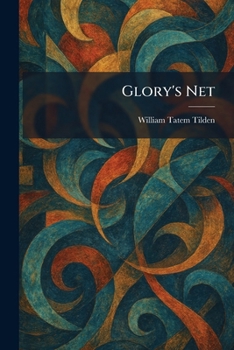
Glory's Net

Select Format
Select Condition 
Book Overview
"Glory's Net" is a compelling sports novel penned by legendary tennis champion William T. Tilden. Set against the high-stakes backdrop of the international tennis circuit during the early 20th century, the story follows the rise of a talented young athlete as he navigates the complexities of fame, competition, and the strict codes of amateurism. Through the eyes of its protagonist, the narrative explores the physical and mental rigors required to reach the pinnacle of the sport, offering an insider's perspective on the golden age of tennis.
Beyond the action on the court, the work delves into the personal sacrifices and ethical dilemmas faced by those who strive for greatness in a world where the line between hobby and profession is increasingly blurred. Tilden brings his unparalleled expertise and passion for the game to life, creating a vivid portrayal of the sport's culture, from the hushed intensity of the galleries to the grit of the practice courts. "Glory's Net" remains a significant piece of sports literature, capturing the spirit of an era and the timeless struggle for personal integrity amidst the pursuit of athletic glory.
This work has been selected by scholars as being culturally important, and is part of the knowledge base of civilization as we know it. This work was reproduced from the original artifact, and remains as true to the original work as possible. Therefore, you may see the original copyright references, library stamps (as most of these works have been housed in our most important libraries around the world), and other notations in the work.
This work is in the public domain in the United States of America, and possibly other nations. Within the United States, you may freely copy and distribute this work, as no entity (individual or corporate) has a copyright on the body of the work.
As a reproduction of a historical artifact, this work may contain missing or blurred pages, poor pictures, errant marks, etc. Scholars believe, and we concur, that this work is important enough to be preserved, reproduced, and made generally available to the public. We appreciate your support of the preservation process, and thank you for being an important part of keeping this knowledge alive and relevant.
Customer Reviews
ThriftBooks® and the ThriftBooks® logo are registered trademarks of Thrift Books Global, LLC
