


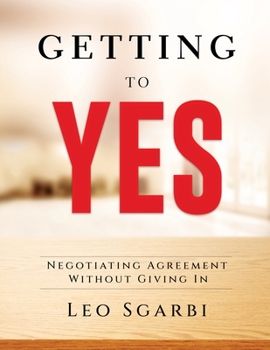
Getting to YES 2022: Negotiating Agreement Without Giving in
No Customer Reviews

Like it or not, you are a negotiator. Negotiation is a fact of life. You discuss a raise with your boss. You try to agree with a stranger on a price for his house. Two lawyers try to settle a lawsuit arising from a car accident. A group of oil companies plan a joint venture exploring for offshore oil. A city official meets with union leaders to avert a transit strike. The United States Secretary of State sits down with his Russian counterpart to seek an agreement limiting nuclear arms. All these are negotiations.
Everyone negotiates something every day. Like Moli?re's Monsieur Jourdain, who was delighted to learn that he had been speaking prose all his life, people negotiate even when they don't think of themselves as doing so.You negotiate with your spouse about where to go for dinner and with your child about when the lights go out. Negotiation is a basic means of getting what you want from others. It is back-and-forth communication designed to reach an agreement when you and the other side have some interests that are shared and others that are opposed (as well as some that may simply be different).
More and more occasions require negotiation; conflict is a growth industry. Everyone wants to participate in decisions that affect them; fewer and fewer people will accept decisions dictated by someone else. People differ, and they use negotiation to handle their differences. Whether in business, government, or the family, people reach most decisions through negotiation.This book is about the method of principled negotiation.
Everyone negotiates something every day. Like Moli?re's Monsieur Jourdain, who was delighted to learn that he had been speaking prose all his life, people negotiate even when they don't think of themselves as doing so.You negotiate with your spouse about where to go for dinner and with your child about when the lights go out. Negotiation is a basic means of getting what you want from others. It is back-and-forth communication designed to reach an agreement when you and the other side have some interests that are shared and others that are opposed (as well as some that may simply be different).
More and more occasions require negotiation; conflict is a growth industry. Everyone wants to participate in decisions that affect them; fewer and fewer people will accept decisions dictated by someone else. People differ, and they use negotiation to handle their differences. Whether in business, government, or the family, people reach most decisions through negotiation.This book is about the method of principled negotiation.
Format:Paperback
Language:English
ISBN:1804344982
ISBN13:9781804344989
Release Date:January 1
Publisher:Leo Sgarbi
Length:190 Pages
Weight:1.00 lbs.
Dimensions:0.4" x 8.5" x 11.0"
Customer Reviews
0 rating
Copyright © 2026 Thriftbooks.com Terms of Use
| Privacy Policy | Do Not
Sell/Share My Personal Information | Cookie Policy | Cookie Preferences | Accessibility Statement
ThriftBooks® and the ThriftBooks® logo are registered trademarks of Thrift Books Global, LLC
ThriftBooks® and the ThriftBooks® logo are registered trademarks of Thrift Books Global, LLC
