


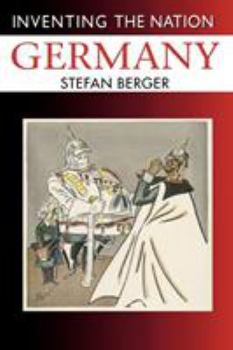
Germany
No Customer Reviews

Select Format
Select Condition 
Book Overview
'What is a German's fatherland?', asked Ernst Moritz Arndt at the
beginning of the nineteenth century. This has arguably been the central
question of modern German history. Germans did not have a united
fatherland until 1871, and, thereafter, major political events in 1918,
1933, 1945, 1968 and 1989 ensured that the answers to Arndt's question
proliferated and diverged with breath-taking speed.
explains the diverse ways in which national identity has been
constructed over more than three centuries. It focuses on the plurality
of contested definitions of 'Germanness'. The themes covered include the
struggles between democratic and non-democratic inventions of the
nation, the construction of the racial nation under Nazism, economic
definitions of the nation, foreigners and 'Germanness', the nation as a
'community of memory', the gendering of the national discourse, the
federal nature of German nationalism and the impact of war on the
construction of a German national identity. This is a fundamental
reappraisal of Germany's history from a perspective available only now
that the dust from the demolished Berlin Wall is settling in a reunited
Germany.
Format:Paperback
Language:English
ISBN:0340705841
ISBN13:9780340705841
Release Date:June 2004
Publisher:Bloomsbury Academic
Length:320 Pages
Weight:1.19 lbs.
Dimensions:0.6" x 5.9" x 8.9"
Customer Reviews
0 rating
Copyright © 2026 Thriftbooks.com Terms of Use
| Privacy Policy | Do Not
Sell/Share My Personal Information | Cookie Policy | Cookie Preferences | Accessibility Statement
ThriftBooks® and the ThriftBooks® logo are registered trademarks of Thrift Books Global, LLC
ThriftBooks® and the ThriftBooks® logo are registered trademarks of Thrift Books Global, LLC
