


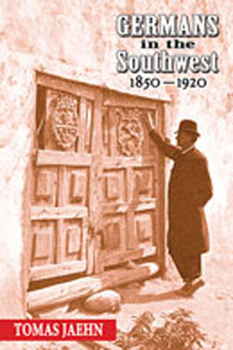
Germans in the Southwest, 1850-1920
No Customer Reviews

Many of the Germans who came to the United States in the nineteenth century ventured far beyond the Atlantic coast to seek their fortunes. Tomas Jaehn examines the experiences of those Germans who settled in the Hispanic Southwest, especially New Mexico, up to the end of World War I. Jaehn relies on literary works by Karl May, Balduin Möllhausen, and Alphonse Bandelier to show how Germans viewed the region and its cultures and how they adjusted to life in the Southwest. His analysis of the Germans' economic, political, and social behavior suggests the region's Hispanic citizens were hospitable to both Jewish and Gentile German arrivals. The arrival of thousands of Anglo Americans by railroad in the early 1880s, however, caused all non-Hispanics to become racially and socially more aware. The long-established Southwest Germans began shielding their cultural identity by celebrating their ethnicity in clubs, churches, and temples that had long exemplified the German presence in the American Midwest. World War I and new immigration laws after World War I concluded the influx of Germans into New Mexico, but those who had arrived before continued their acculturation to the Southwest as well as the celebrations of their heritage.
Format:Hardcover
Language:English
ISBN:0826334989
ISBN13:9780826334985
Release Date:June 2005
Publisher:Unm Press
Length:256 Pages
Weight:1.25 lbs.
Dimensions:0.9" x 6.3" x 9.5"
Customer Reviews
0 rating
Copyright © 2026 Thriftbooks.com Terms of Use
| Privacy Policy | Do Not
Sell/Share My Personal Information | Cookie Policy | Cookie Preferences | Accessibility Statement
ThriftBooks® and the ThriftBooks® logo are registered trademarks of Thrift Books Global, LLC
ThriftBooks® and the ThriftBooks® logo are registered trademarks of Thrift Books Global, LLC
