


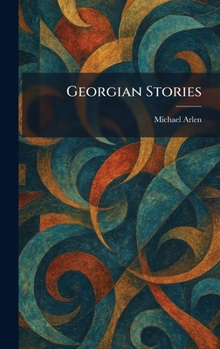
Georgian Stories

"Georgian Stories 1925" is a refined anthology that captures the literary zeitgeist of the early twentieth century. This collection brings together a diverse array of short fiction, reflecting the artistic sensibilities and cultural shifts of the Georgian era. Featuring contributions from notable writers of the period, including Michael Arlen, the work explores a broad spectrum of human experience, ranging from social satire and psychological drama to tales of mystery and domestic life.
The stories within this volume are emblematic of a transitional period in British literature, where traditional narrative structures began to meet the innovative techniques of modernism. Themes of class, postwar disillusionment, and the nuances of modern identity are woven throughout the collection, providing a rich tapestry of the period's intellectual and creative life. "Georgian Stories 1925" serves as both an engaging literary experience and a significant historical document, showcasing the depth and variety of the short story form during a pivotal decade. It remains a valuable resource for readers seeking to understand the evolution of contemporary fiction and the enduring legacy of Georgian-era prose.
This work has been selected by scholars as being culturally important, and is part of the knowledge base of civilization as we know it. This work was reproduced from the original artifact, and remains as true to the original work as possible. Therefore, you may see the original copyright references, library stamps (as most of these works have been housed in our most important libraries around the world), and other notations in the work.
This work is in the public domain in the United States of America, and possibly other nations. Within the United States, you may freely copy and distribute this work, as no entity (individual or corporate) has a copyright on the body of the work.
As a reproduction of a historical artifact, this work may contain missing or blurred pages, poor pictures, errant marks, etc. Scholars believe, and we concur, that this work is important enough to be preserved, reproduced, and made generally available to the public. We appreciate your support of the preservation process, and thank you for being an important part of keeping this knowledge alive and relevant.
Customer Reviews
ThriftBooks® and the ThriftBooks® logo are registered trademarks of Thrift Books Global, LLC
