


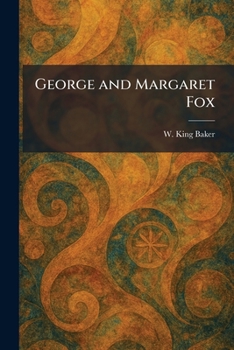
George and Margaret Fox

"George and Margaret Fox" is an insightful biographical study of the lives and spiritual legacies of the two most prominent figures in the founding of the Religious Society of Friends. W. King Baker offers a detailed look into the partnership between George Fox, the visionary leader of the Quaker movement, and Margaret Fox, whose organizational brilliance and steadfast faith earned her the title of the "Mother of Quakerism."
The work traces George Fox's journey from his early spiritual awakenings to his role as a radical reformer who emphasized the presence of the "Inner Light" in every individual. Parallel to his story is that of Margaret Fell, whose home at Swarthmoor Hall became a vital center for the movement. The narrative explores their shared commitment to religious liberty and their endurance through periods of intense persecution and imprisonment. By focusing on their personal correspondence and public testimonies, "George and Margaret Fox" provides a comprehensive view of how their union fortified the Quaker faith during its formative years. This book is a significant historical resource for understanding the development of nonconformist Christianity and the influential role of these two pioneering reformers.
This work has been selected by scholars as being culturally important, and is part of the knowledge base of civilization as we know it. This work was reproduced from the original artifact, and remains as true to the original work as possible. Therefore, you may see the original copyright references, library stamps (as most of these works have been housed in our most important libraries around the world), and other notations in the work.
This work is in the public domain in the United States of America, and possibly other nations. Within the United States, you may freely copy and distribute this work, as no entity (individual or corporate) has a copyright on the body of the work.
As a reproduction of a historical artifact, this work may contain missing or blurred pages, poor pictures, errant marks, etc. Scholars believe, and we concur, that this work is important enough to be preserved, reproduced, and made generally available to the public. We appreciate your support of the preservation process, and thank you for being an important part of keeping this knowledge alive and relevant.
Customer Reviews
ThriftBooks® and the ThriftBooks® logo are registered trademarks of Thrift Books Global, LLC
