


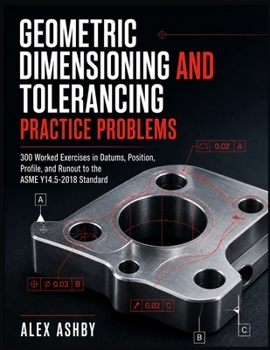
Geometric Dimensioning and Tolerancing Practice Problems: 300 Worked Exercises in Datums, Position, Profile, and Runout to the ASME Y14.5-2018 Standar

Reading a feature control frame is only the beginning. Real competence comes from selecting functional datums, calculating available tolerance, predicting assembly boundaries, and choosing an inspection method that tests the requirement actually shown on the drawing.
Geometric Dimensioning and Tolerancing Practice Problems develops that competence through 300 worked exercises aligned with the concepts and conventions of ASME Y14.5-2018. The progression begins with drawing language and features of size, then advances through datum reference frames, form and orientation, position, profile, runout, specialized features, measurement uncertainty, functional gaging, and geometric stack analysis.
Inside you will learn to: Decode feature control frames and distinguish basic, reference, size, and geometric dimensionsDetermine MMC, LMC, bonus tolerance, virtual condition, and datum shiftBuild stable datum reference frames from functional interfacesSolve position, composite pattern, profile, and runout calculationsPlan CMM, surface, rotary, and functional-gage inspectionsEvaluate measurement uncertainty and guard-banded acceptance decisionsConnect drawing controls to assembly clearance and tolerance stacksEvery chapter combines concise explanations, stepwise derivations, technical diagrams, worked examples, practice problems, and complete answers. The capstone exercises integrate design intent, specification, manufacturing, measurement, and release evidence for realistic mechanical parts.
This practical reference is designed for mechanical and manufacturing engineers, designers, drafters, quality professionals, inspectors, CMM programmers, engineering students, and GDTP certification candidates who want calculation-centered practice instead of symbol memorization alone.
Customer Reviews
ThriftBooks ® and the ThriftBooks ® logo are registered trademarks of Thrift Books Global, LLC
