


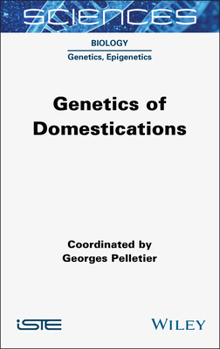
Genetics of Domestications
No Customer Reviews

The domestication of plants, animals and microorganisms has enabled the development of agriculture, animal husbandry, the processing of their products and, ultimately, civilizations.
The species concerned by domestication, the regions of the world where it could take place, the clues that enable us to identify wild ancestors, the particularly morphological or physiological properties that characterize it, the modified genes, the genetic exchanges that domesticated organisms maintained with their wild ancestors, and the consequences of the structuring of the species that resulted in animal breeds or plant varieties, are all questions that develop studies in the fields of archaeology, sociology, ecology and genetics.
Genetics of Domestications deals with the contribution of modern methods of genetic analysis and genomics to historical knowledge of domestications, their nature and diversity, based on examples of twelve species or groups of species.
The species concerned by domestication, the regions of the world where it could take place, the clues that enable us to identify wild ancestors, the particularly morphological or physiological properties that characterize it, the modified genes, the genetic exchanges that domesticated organisms maintained with their wild ancestors, and the consequences of the structuring of the species that resulted in animal breeds or plant varieties, are all questions that develop studies in the fields of archaeology, sociology, ecology and genetics.
Genetics of Domestications deals with the contribution of modern methods of genetic analysis and genomics to historical knowledge of domestications, their nature and diversity, based on examples of twelve species or groups of species.
Format:Hardcover
Language:English
ISBN:1789451671
ISBN13:9781789451672
Release Date:November 2024
Publisher:Wiley-Iste
Length:288 Pages
Weight:1.23 lbs.
Dimensions:0.6" x 6.1" x 9.2"
Customer Reviews
0 rating
Copyright © 2026 Thriftbooks.com Terms of Use
| Privacy Policy | Do Not
Sell/Share My Personal Information | Cookie Policy | Cookie Preferences | Accessibility Statement
ThriftBooks® and the ThriftBooks® logo are registered trademarks of Thrift Books Global, LLC
ThriftBooks® and the ThriftBooks® logo are registered trademarks of Thrift Books Global, LLC
