


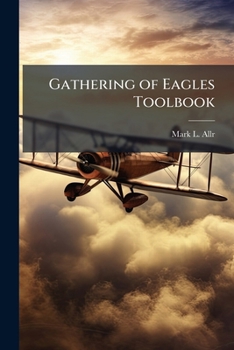
Gathering of Eagles Toolbook

The GOE ToolBook is an interactive, computer database depicting aviation heroes from the annual Gathering of Eagles (GOE) events at Maxwell Air Force Base, Alabama, in 1994, 1995, and 1996. The GOE ToolBook is designed to present aviation heritage in a way that is both enjoyable and educational. Indexed and simple to navigate, the GOE ToolBook does several things: It allows the user to view attractive, high-resolution scans of artwork depicting the aviation heroes ("Eagles") and their aircraft. (The artistic depictions are from original paintings commissioned by the GOE teams and the International Association of Eagles, a private organization established to promote aviation history.) The ToolBook presents written narratives about the Eagles and their aircraft, derived from research conducted by the GOE Teams of 1994, 1995, and 1996. The ToolBook also contains audio and video segments showing all but a few of the Eagles in live, on-stage interviews and almost all of their aircraft in flight. (In some cases, the video segments capture the Eagles actually flying their aircraft at key moments in history. In other cases, their type of aircraft can be seen in flight.) Future GOE teams are expected to expand the GOE ToolBook to include the artwork and historical information from past GOEs (dating back to 1982) and from future GOEs.
This work has been selected by scholars as being culturally important, and is part of the knowledge base of civilization as we know it. This work was reproduced from the original artifact, and remains as true to the original work as possible. Therefore, you will see the original copyright references, library stamps (as most of these works have been housed in our most important libraries around the world), and other notations in the work.
This work is in the public domain in the United States of America, and possibly other nations. Within the United States, you may freely copy and distribute this work, as no entity (individual or corporate) has a copyright on the body of the work.
As a reproduction of a historical artifact, this work may contain missing or blurred pages, poor pictures, errant marks, etc. Scholars believe, and we concur, that this work is important enough to be preserved, reproduced, and made generally available to the public. We appreciate your support of the preservation process, and thank you for being an important part of keeping this knowledge alive and relevant.
Customer Reviews
ThriftBooks® and the ThriftBooks® logo are registered trademarks of Thrift Books Global, LLC
