


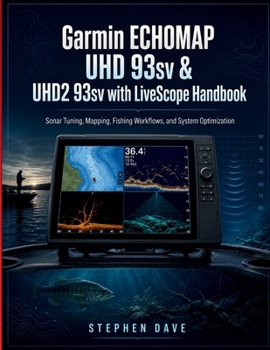
Garmin ECHOMAP UHD 93sv & UHD2 93sv with LiveScope Handbook: Sonar Tuning, Mapping, Fishing Workflows, and System Optimization

Turn a Garmin ECHOMAP UHD 93sv or UHD2 93sv display into a dependable fishing and navigation system. This independent handbook explains how the chartplotter, traditional sonar, ClearV , SideV , LiveScope, transducers, charts, waypoints, networking, power supply, boat movement and operator decisions work together-before settings are changed, cables are purchased or holes are drilled.
The opening chapters compare the ECHOMAP UHD 93sv and UHD2 93sv in practical terms, separating model-specific differences from operating principles that apply to both generations. Readers examine rear connections, available sources, data paths, network options, screens, keys, overlays, combination pages and source selection.
System planning begins with the fishing task and works backward through display roles, compatible transducers, LiveScope architecture, module placement, power distribution, cable routes and future expansion. This approach helps prevent incompatible purchases, unnecessary duplication and installations that are difficult to maintain.
Installation chapters cover viewing position, dry fitting, rear clearance, service loops, strain relief, corrosion prevention, transducer line of sight, hull turbulence, mounting height, waterline angle, trolling-motor movement and full-range testing. Electrical chapters explain stable voltage, conductor-sizing principles, fuse placement, negative returns, battery capacity, voltage drop, interference and isolation tests.
The book also identifies conditions that require assistance from a qualified marine installer or electrician. Installation decisions must follow current equipment instructions, vessel requirements and applicable electrical standards.
On-water chapters explain what each acoustic view is actually showing. Readers learn to interpret traditional returns, bottom composition, fish arches, ClearV and SideV views, forward-facing targets, range, gain, frequency, color intensity, scroll speed, lure visibility and the relationship between transducer direction and boat position.
Controlled adjustment replaces universal "best settings." Readers learn to establish a known baseline, change one variable at a time, repeat passes over the same area and compare results under the water conditions and installation characteristics affecting their own boat.
LiveScope coverage connects transducer orientation, range, gain, noise rejection, target movement, lure tracking, boat control, casting direction and target reacquisition. The goal is to translate movement on the display into a reliable understanding of where the target is located in relation to the transducer and vessel.
Navigation coverage develops charts, contours, waypoints, routes, tracks, user data, mobile synchronization, wired sharing, sensor networks and bow-to-console information flow. Fishing scenarios connect searching, interpretation, positioning, casting and reacquisition without allowing attention to the screen to replace safe lookout or responsible navigation.
Troubleshooting separates mechanical, acoustic, electrical, network, application, chart and interface symptoms. Commissioning records, baseline logs, worksheets, maintenance checks and recovery procedures make the book useful from initial installation through seasonal service and later expansion.
Readers will learn how to:
Plan the complete installation before purchasing cables or drillingInstall displays, power connections, networks and transducers methodicallyInterpret traditional, scanning and forward-facing acoustic viewsAdjust performance through controlled on-water testsBuild efficient waypoint, route, search and casting routinesDiagnose interference, bottom loss, connection and source problemsMaintain useful baseline records for future comparisonChoose upgrades according to a clearly identified limitationCustomer Reviews
ThriftBooks ® and the ThriftBooks ® logo are registered trademarks of Thrift Books Global, LLC
