


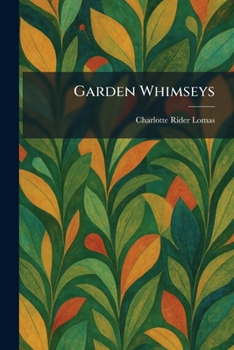
Garden Whimseys

Select Format
Select Condition 
Book Overview
"Garden Whimseys" is a charming collection of personal essays and reflections on the art and spirit of gardening. Written with a deep appreciation for the natural world, Charlotte Rider Lomas explores the joys, challenges, and quiet meditations found within the bounds of a cultivated garden. The work delves into the specific personalities of various flowers, the changing rhythms of the seasons, and the profound connection between the gardener and their soil.
Through evocative prose, Lomas captures the whimsical nature of plant life, offering both practical insights and poetic observations. The book serves as a timeless tribute to the beauty of the garden, appealing to both the dedicated horticulturalist and the casual nature lover. It emphasizes the therapeutic and aesthetic value of green spaces, making it a significant piece of early 20th-century nature writing. "Garden Whimseys" remains a delightful exploration of the horticultural life, celebrating the small wonders and enduring lessons found among the petals and paths of a well-loved garden.
This work has been selected by scholars as being culturally important, and is part of the knowledge base of civilization as we know it. This work was reproduced from the original artifact, and remains as true to the original work as possible. Therefore, you may see the original copyright references, library stamps (as most of these works have been housed in our most important libraries around the world), and other notations in the work.
This work is in the public domain in the United States of America, and possibly other nations. Within the United States, you may freely copy and distribute this work, as no entity (individual or corporate) has a copyright on the body of the work.
As a reproduction of a historical artifact, this work may contain missing or blurred pages, poor pictures, errant marks, etc. Scholars believe, and we concur, that this work is important enough to be preserved, reproduced, and made generally available to the public. We appreciate your support of the preservation process, and thank you for being an important part of keeping this knowledge alive and relevant.
Customer Reviews
ThriftBooks ® and the ThriftBooks ® logo are registered trademarks of Thrift Books Global, LLC
