


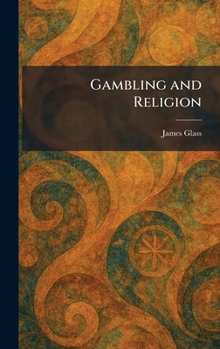
Gambling and Religion

"Gambling and Religion" offers a comprehensive examination of the moral and ethical dilemmas associated with gambling through a religious and sociological lens. Written by James Glass, this work investigates the profound tension between the culture of chance and the tenets of Christian faith, analyzing how betting and speculation impact the individual soul and the collective community. The author provides a detailed critique of the psychological effects of gambling, arguing that it undermines character and erodes the foundations of a stable society.
As a significant document of early 20th-century social thought, the book reflects the concerns of moral reform movements that sought to address the social ills of the era. Glass constructs a theological and logical case against the pursuit of unearned wealth, advocating for a life centered on industry, integrity, and spiritual responsibility. By examining the historical and religious attitudes toward vice, "Gambling and Religion" serves as an important resource for understanding the evolution of modern ethical discourse. This work is especially relevant for those interested in the intersection of faith and social policy, providing a clear window into the historical fight for moral preservation in a rapidly changing world.
This work has been selected by scholars as being culturally important, and is part of the knowledge base of civilization as we know it. This work was reproduced from the original artifact, and remains as true to the original work as possible. Therefore, you may see the original copyright references, library stamps (as most of these works have been housed in our most important libraries around the world), and other notations in the work.
This work is in the public domain in the United States of America, and possibly other nations. Within the United States, you may freely copy and distribute this work, as no entity (individual or corporate) has a copyright on the body of the work.
As a reproduction of a historical artifact, this work may contain missing or blurred pages, poor pictures, errant marks, etc. Scholars believe, and we concur, that this work is important enough to be preserved, reproduced, and made generally available to the public. We appreciate your support of the preservation process, and thank you for being an important part of keeping this knowledge alive and relevant.
Customer Reviews
ThriftBooks ® and the ThriftBooks ® logo are registered trademarks of Thrift Books Global, LLC
