


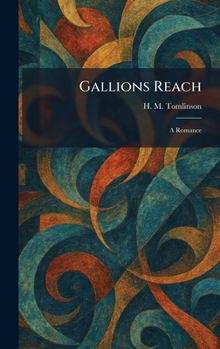
Gallions Reach: A Romance

"Gallions Reach a Romance" is a masterful exploration of adventure, guilt, and the search for identity set against the backdrop of the high seas and the dense jungles of the Far East. The story follows James Coote, a London shipping clerk whose life is irrevocably changed after a fatal confrontation with his employer. Fleeing the consequences of his actions, Coote embarks on a journey that takes him from the fog-drenched docks of the Thames to the exotic and perilous landscapes of Malaya.
H.M. Tomlinson, renowned for his evocative prose and deep understanding of maritime life, crafts a narrative that is both a physical odyssey and a psychological study. As Coote navigates the challenges of life aboard a steamship and the mysteries of the interior tropics, he must confront the nature of his own soul and the reality of his past. The novel is celebrated for its rich, atmospheric descriptions and its philosophical depth, capturing the transition from the industrial world to the untamed wilderness.
"Gallions Reach a Romance" stands as a significant contribution to early 20th-century literature, blending the traditions of the sea story with a modern sensibility. It remains a compelling read for those drawn to tales of exploration, moral complexity, and the enduring power of the sea.
This work has been selected by scholars as being culturally important, and is part of the knowledge base of civilization as we know it. This work was reproduced from the original artifact, and remains as true to the original work as possible. Therefore, you may see the original copyright references, library stamps (as most of these works have been housed in our most important libraries around the world), and other notations in the work.
This work is in the public domain in the United States of America, and possibly other nations. Within the United States, you may freely copy and distribute this work, as no entity (individual or corporate) has a copyright on the body of the work.
As a reproduction of a historical artifact, this work may contain missing or blurred pages, poor pictures, errant marks, etc. Scholars believe, and we concur, that this work is important enough to be preserved, reproduced, and made generally available to the public. We appreciate your support of the preservation process, and thank you for being an important part of keeping this knowledge alive and relevant.
Customer Reviews
ThriftBooks ® and the ThriftBooks ® logo are registered trademarks of Thrift Books Global, LLC
