


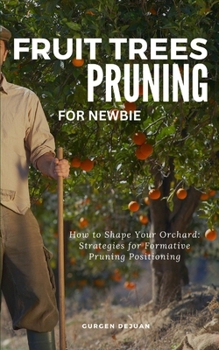
Fruit Trees Pruning for Newbie: How To Shape Your Orchard: Strategies For Formative Pruning Positioning
No Customer Reviews

Pruning a fruit tree involves cutting off branches or other tree elements in a targeted manner to improve the tree's overall health, fruit yield, and aesthetic appeal. Regular pruning is an essential part of caring for fruit trees; the best time to do it is during the tree's dormant season, which typically occurs in late winter or early spring but can vary by variety and region.
When pruning fruit trees, keep in mind these goals:
- Pruning promotes health and vitality by removing unhealthy, diseased, or otherwise compromised branches that may serve as entry points for pests and illnesses. Because more light and air can reach the tree canopy, it encourages the development of new, healthy branches.
- In order to promote fruit production, it is important to prune the tree correctly. This is done by eliminating any very large branches that could compete for resources and by structuring the tree so that fruits can develop and ripen more efficiently.
- Tree structure: Trees are easier to harvest fruits from and less likely to break when pruned to keep them at a proper size and shape.
- Increasing air circulation within the canopy by removing densely packed branches decreases the likelihood of fungal illnesses, which brings us to our fourth point: disease prevention. In addition to reducing the risk of illness, pruning exposes the tree to more sunshine, which dries off any excess moisture.
- For aesthetic purposes, pruning can improve the tree's overall look, making it a more attractive landscape element.
- Pruning methods differ for different fruit trees based on factors such as species, age, and growth patterns. Tree training, suckers and watersprout removal, branch thinning, and heading back are all common pruning strategies.
If you want your pruning cuts to heal fast and not spread disease, be sure to use sharp, clean equipment. To get the most out of pruning while causing the least amount of stress to the tree, timing and technique are also very important. For pruning advice tailored to your area and tree species, it's wise to contact a local arborist or extension service if you're not sure what to do.
When pruning fruit trees, keep in mind these goals:
- Pruning promotes health and vitality by removing unhealthy, diseased, or otherwise compromised branches that may serve as entry points for pests and illnesses. Because more light and air can reach the tree canopy, it encourages the development of new, healthy branches.
- In order to promote fruit production, it is important to prune the tree correctly. This is done by eliminating any very large branches that could compete for resources and by structuring the tree so that fruits can develop and ripen more efficiently.
- Tree structure: Trees are easier to harvest fruits from and less likely to break when pruned to keep them at a proper size and shape.
- Increasing air circulation within the canopy by removing densely packed branches decreases the likelihood of fungal illnesses, which brings us to our fourth point: disease prevention. In addition to reducing the risk of illness, pruning exposes the tree to more sunshine, which dries off any excess moisture.
- For aesthetic purposes, pruning can improve the tree's overall look, making it a more attractive landscape element.
- Pruning methods differ for different fruit trees based on factors such as species, age, and growth patterns. Tree training, suckers and watersprout removal, branch thinning, and heading back are all common pruning strategies.
If you want your pruning cuts to heal fast and not spread disease, be sure to use sharp, clean equipment. To get the most out of pruning while causing the least amount of stress to the tree, timing and technique are also very important. For pruning advice tailored to your area and tree species, it's wise to contact a local arborist or extension service if you're not sure what to do.
Format:Paperback
Language:English
ISBN13:9798320865591
Release Date:March 2024
Publisher:Independently Published
Length:68 Pages
Weight:0.17 lbs.
Dimensions:0.1" x 5.0" x 8.0"
Customer Reviews
0 rating
Copyright © 2026 Thriftbooks.com
Terms of Use | Privacy Policy | Do Not Sell/Share My Personal Information | Cookie Policy | Cookie Preferences | Accessibility Statement
ThriftBooks ® and the ThriftBooks ® logo are registered trademarks of Thrift Books Global, LLC
ThriftBooks ® and the ThriftBooks ® logo are registered trademarks of Thrift Books Global, LLC
