


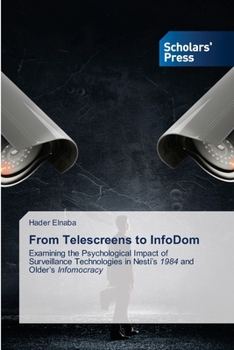
From Telescreens to InfoDom
No Customer Reviews

This book comparatively analyzes Fido Nesti's 1984: The Graphic Novel and Malka Older's Infomocracy to explore the psychological anxieties surrounding surveillance in dystopian literature. The study integrates Freud's psychoanalytic structural model (id, ego, superego) with Foucault's Panopticon theory to examine how different regimes of control-totalitarian and algorithmic-strain individual psychology. Nesti's 1984 portrays overt, fear-based panoptic control, visually suppressing Winston Smith's identity. Infomocracy presents a subtler, technocratic dominance maintained by algorithmic governance that compels self-surveillance. The research demonstrates that while the means of control differ, both societies necessitate profound internal conflicts. By focusing on defense mechanisms like repression, denial, and projection, the study reveals comparable psychic outcomes: anxiety, self-censorship, and fragmented identity. Ultimately, this work argues that combining psychoanalytic and Foucauldian theories offers a multidimensional view of how power embeds itself in the psychological fabric, highlighting the crucial need to examine the mental toll of control in our digitized world.
Format:Paperback
Language:English
ISBN:6209102042
ISBN13:9786209102042
Release Date:December 2025
Publisher:Scholars' Press
Length:108 Pages
Weight:0.34 lbs.
Dimensions:0.3" x 6.0" x 9.0"
Related Subjects
Language ArtsCustomer Reviews
0 rating
Copyright © 2026 Thriftbooks.com
Terms of Use | Privacy Policy | Do Not Sell/Share My Personal Information | Cookie Policy | Cookie Preferences | Accessibility Statement
ThriftBooks ® and the ThriftBooks ® logo are registered trademarks of Thrift Books Global, LLC
ThriftBooks ® and the ThriftBooks ® logo are registered trademarks of Thrift Books Global, LLC
