


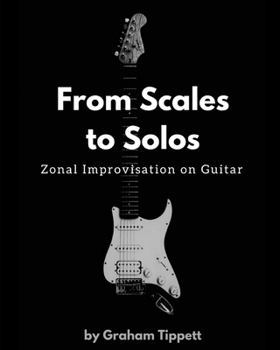
From Scales to Solos: Zonal Improvisation on Guitar

You learned the patterns. CAGED, three-note-per-string, whatever route you took - they're under your fingers and you can run them cleanly. And when you solo, the lines come out sounding exactly like what they are. Up and back down, predictable, mechanical.
The scales aren't the problem. Running a pattern from bottom to top is an exercise, and an exercise practised for years becomes the thing you play when you improvise. The usual prescriptions - break out of the box, learn some licks - treat the symptom.
Work in zones insteadReduced areas of the neck, with patterns designed for them, so you stop thinking in lines that run the length of the fretboard. It's a small change in how you practise and it produces a different kind of playing: lines that move because you chose where they should go, not because the pattern continued.
Fifteen scales, three methodsModes, melodic minor, diminished, whole tone and more, each broken into zones, with three distinct ways to work them:
Several scales in one zone - you start hearing and seeing what actually differs between scales, and can change between them mid-solo. This is where improvising really starts.
One scale across every zone - move anywhere on the neck in any tonality without getting lost.
Arpeggios inside scales - not as a separate system to learn, but as the tones already sitting inside what you're playing. Harmonic clarity without new patterns.
Who it's forIntermediate to advanced players who know their scales and can't make them sound musical. Guitarists moving past pentatonic and blues soloing into harder harmonic territory. Anyone who has enough material and not enough control over it.
Not a licks book and not a theory book. It's a tool for making your own lines.
Customer Reviews
ThriftBooks ® and the ThriftBooks ® logo are registered trademarks of Thrift Books Global, LLC
