


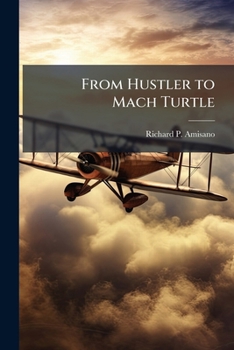
From Hustler to Mach Turtle: Air Force Transformation in Vietnam, 1961-1966

The ACSC Vietnam research seminar curriculum had its students read a multitude of books on that conflict. They were encouraged to read about all aspects of the war including problems within the military and how and why it fought the way it did. We found many books/papers deriding US policy, faulting the application of both ground forces and air power. Over the course of the seminar, it was clear that a large body of work existed singling out Air Force doctrine and capabilities as unable to meet the challenge of bombing North Vietnam into surrender. Less was found about Air Force successes over South Vietnam, perhaps because South Vietnam was seen as a lower threat environment, with an unseen enemy and no Rolling Thunder scale campaigns. After reading the volumes of work criticizing the Air Force, its officer corps, national defense policies, etc., this student decided to seek out examples of success, of transformation and adaptation. FARM GATE came up often, as did Army Special Forces. But the Air Force's shift from high speed nuclear bombers, to slow, low flying counterinsurgency aircraft, and it's corresponding (albeit slight) shifts in doctrine became fascinating topics--inspiration to write how the Air Force, as institution, changed. The conclusion, then, is that Air Force leadership, and the institution itself, did adapt and succeed in missions it never thought it would fly. The sources for the shift seem unlikely: small groups of officers and men dedicated to building new capability, General Maxwell Taylor, General Curtis LeMay, and an administration looking to move away from the paradigm of Massive Retaliation.
This work has been selected by scholars as being culturally important, and is part of the knowledge base of civilization as we know it. This work was reproduced from the original artifact, and remains as true to the original work as possible. Therefore, you will see the original copyright references, library stamps (as most of these works have been housed in our most important libraries around the world), and other notations in the work.
This work is in the public domain in the United States of America, and possibly other nations. Within the United States, you may freely copy and distribute this work, as no entity (individual or corporate) has a copyright on the body of the work.
As a reproduction of a historical artifact, this work may contain missing or blurred pages, poor pictures, errant marks, etc. Scholars believe, and we concur, that this work is important enough to be preserved, reproduced, and made generally available to the public. We appreciate your support of the preservation process, and thank you for being an important part of keeping this knowledge alive and relevant.
Customer Reviews
ThriftBooks® and the ThriftBooks® logo are registered trademarks of Thrift Books Global, LLC
