


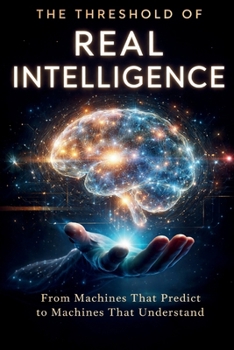
From Epistemic Logic to Machine Self-Awareness: How AI Learns to Know What It Knows

What if the future of AI is not defined by bigger models alone, but by whether machines can truly know?
From Epistemic Logic to Machine Self-Awareness explores one of the most important frontiers in artificial intelligence: the shift from raw capability to epistemic intelligence.
As today's AI systems become more fluent, more powerful, and more humanlike in their outputs, a deeper question emerges beneath the surface: Do machines actually understand anything, or are they only predicting what comes next?
This book takes readers on a compelling intellectual journey through the logic of knowledge, belief, uncertainty, self-reflection, and artificial minds. Blending philosophy, computer science, cognitive science, and AGI theory, it examines what it would take for machines not only to generate answers, but to represent knowledge, revise beliefs, detect ignorance, reason about other minds, and reflect on themselves.
Inside, you'll explore:
the difference between knowledge and belief
why prediction is not the same as understanding
how epistemic logic became foundational to AI and computer science
why today's systems still struggle with hallucinations, overconfidence, and uncertainty
how reflective reasoning, self-modeling, and theory of mind may shape the next generation of intelligent machines
why alignment is ultimately a problem of knowledge, misunderstanding, and hidden assumptions
what AI reveals about human consciousness, self-deception, and the nature of intelligence itself
At once accessible and intellectually rich, From Epistemic Logic to Machine Self-Awareness is for readers interested in artificial intelligence, AGI, philosophy of mind, cognitive science, and the future of human-machine intelligence.
This is not just a book about what AI can do.
It is a book about what it means to know.
Customer Reviews
ThriftBooks ® and the ThriftBooks ® logo are registered trademarks of Thrift Books Global, LLC
