


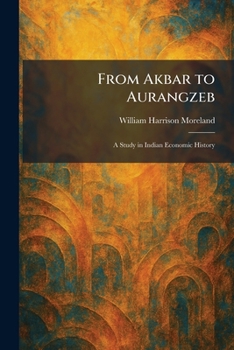
From Akbar to Aurangzeb: A Study in Indian Economic History

Select Format
Select Condition 
Book Overview
"From Akbar to Aurangzeb; A Study in Indian Economic History" is an authoritative examination of the economic shifts within the Mughal Empire during a transformative period in Indian history. This work meticulously analyzes the transition from the reign of Akbar to the rule of Aurangzeb, focusing on the structural changes in trade, commerce, and agricultural production. It explores how the empire's internal policies and increasing interactions with European trading companies shaped the material conditions of the subcontinent.
The study delves into the complexities of the agrarian system, the impact of taxation on the peasantry, and the burgeoning maritime trade that connected India with the global economy. By synthesizing administrative records and contemporary accounts, the author provides a detailed portrait of the economic life of 17th-century India. This volume serves as an essential resource for scholars and readers interested in the Mughal era, economic history, and the historical foundations of South Asian development. It offers deep insights into the fiscal management and commercial evolution of one of history's most powerful and influential empires.
This work has been selected by scholars as being culturally important, and is part of the knowledge base of civilization as we know it. This work was reproduced from the original artifact, and remains as true to the original work as possible. Therefore, you may see the original copyright references, library stamps (as most of these works have been housed in our most important libraries around the world), and other notations in the work.
This work is in the public domain in the United States of America, and possibly other nations. Within the United States, you may freely copy and distribute this work, as no entity (individual or corporate) has a copyright on the body of the work.
As a reproduction of a historical artifact, this work may contain missing or blurred pages, poor pictures, errant marks, etc. Scholars believe, and we concur, that this work is important enough to be preserved, reproduced, and made generally available to the public. We appreciate your support of the preservation process, and thank you for being an important part of keeping this knowledge alive and relevant.
Customer Reviews
ThriftBooks ® and the ThriftBooks ® logo are registered trademarks of Thrift Books Global, LLC
