


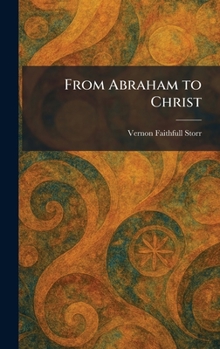
From Abraham to Christ

"From Abraham to Christ" is a profound theological exploration that traces the spiritual and historical lineage of the Christian faith from its patriarchal origins to the advent of Jesus Christ. Written by Vernon Faithfull Storr, a distinguished clergyman and scholar, this work examines the evolution of religious thought and the continuity of divine revelation across the centuries. Storr meticulously analyzes the figure of Abraham as the foundation of the covenant and follows the development of the Hebrew faith, illustrating how the themes of promise and prophecy find their ultimate fulfillment in the New Testament.
The book serves as an insightful bridge between the Old and New Testaments, offering readers a comprehensive understanding of the biblical narrative as a unified whole. Storr emphasizes the historical and spiritual significance of the journey from the early nomadic faith of the patriarchs to the established teachings of Christianity. This scholarly yet accessible study is an invaluable resource for students of divinity, church history, and anyone seeking a deeper appreciation of the theological foundations that connect the history of Israel with the life and mission of Christ. By highlighting the progressive nature of revelation, Storr provides a compelling argument for the internal coherence of the Bible and its central figures.
This work has been selected by scholars as being culturally important, and is part of the knowledge base of civilization as we know it. This work was reproduced from the original artifact, and remains as true to the original work as possible. Therefore, you may see the original copyright references, library stamps (as most of these works have been housed in our most important libraries around the world), and other notations in the work.
This work is in the public domain in the United States of America, and possibly other nations. Within the United States, you may freely copy and distribute this work, as no entity (individual or corporate) has a copyright on the body of the work.
As a reproduction of a historical artifact, this work may contain missing or blurred pages, poor pictures, errant marks, etc. Scholars believe, and we concur, that this work is important enough to be preserved, reproduced, and made generally available to the public. We appreciate your support of the preservation process, and thank you for being an important part of keeping this knowledge alive and relevant.
Customer Reviews
ThriftBooks ® and the ThriftBooks ® logo are registered trademarks of Thrift Books Global, LLC
