


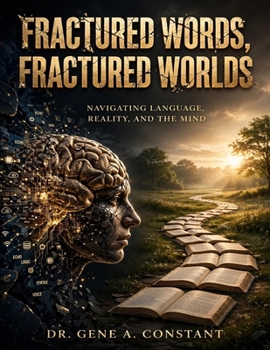
Fractured Words, Fractured Worlds

Reading is not innate. It is neural adaptation.
To read, the brain recycles ancient circuits built for recognizing faces and objects and trains them to decode letters with unnatural precision. When that decoding becomes automatic, attention is freed for something remarkable: imagining other minds. Deep reading trains the capacity to understand what other people think and feel.
Fractured Words, Fractured Worlds examines what happens when that process is constantly interrupted by hyperlinks, fluid text, and the expectation of the next notification.
IN THIS BOOK
- The reading brain: how literacy physically reshapes the brain and why the reading environment matters.
- The empathy engine: how deep reading builds Theory of Mind, the ability to model the emotional lives of others.
- The screen inferiority effect: the evidence that comprehension declines on screens and what the eyes and body are doing while it happens.
- Societal rewiring: how algorithms exploit fast, reactive thinking and feed affective polarization.
- The Neuro-Affective Digital Literacy (NADL) model: a research framework educators, designers, and readers can use to measure and reduce cognitive overload.
For educators, parents, homeschool families, designers, and anyone who wants to reclaim the quiet, bounded attention that deep reading and genuine understanding require. A 30-term dictionary and a note on sources are included.
Global Sovereign University is a tuition-free 501(c)(3) nonprofit funded by the sale of books like this one.
Customer Reviews
ThriftBooks ® and the ThriftBooks ® logo are registered trademarks of Thrift Books Global, LLC
