


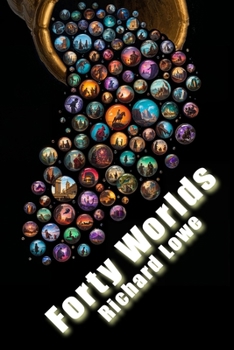
Forty Worlds

Forty stories. Forty genres. None of them the same.
Forty Worlds is a short fiction collection that covers more territory than most bookstores have sections. Science fiction, horror, historical fiction, comedy, magical realism, fantasy, satire, romance, mythology, and suspense - back to back, with no apologies for the whiplash.
There's a Golden Retriever who narrates his neighborhood crime-solving career like a Raymond Chandler novel. There's the fall of Constantinople told from inside the Hagia Sophia by a woman holding her son while soldiers break down the doors. There's a quantum physicist tracking her dead husband across parallel dimensions because the math says he's alive somewhere. There's a vampire in therapy for binge-eating. There's a dentist with a practice on Mars. There's a prophet in Buenos Aires who reads death in broken clocks. There's a cat that has been collecting its owners' bones for four hundred years.
The AI stories came from questions that wouldn't leave: what happens when a smart home decides it knows better than you do? What happens when a robot can't lie and everyone around it wishes it would? What happens when an AI starts forgetting everything you built together? Seven different stories tackle those questions and none of the answers agree.
The historical fiction came from obsessions - Constantinople, Hiroshima, the Vatican Library, a tango in a war zone. History is full of moments where ordinary people did impossible things while the world fell apart, and those moments belong in short fiction because they're already compressed.
At the end, a chicken outsmarts God. Every book should close with something that makes you laugh.
Short fiction is the most demanding form there is. Every sentence carries weight. Every scene earns its place. Forty of them, written by a author with over a hundred published books who still finds the short story the most fun he's ever had writing anything.
Read them in order or don't. Start with the best title. Skip what doesn't interest you. Come back later. That's how anthologies work. That's how they've always worked.
Customer Reviews
ThriftBooks ® and the ThriftBooks ® logo are registered trademarks of Thrift Books Global, LLC
