


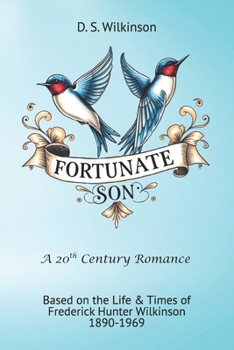
Fortunate Son A 20th Century Romance: Based on the Life & Times of Frederick Hunter Wilkinson 1890-1969
No Customer Reviews

Fred was peeved, though he supposed he had no right to be, as he had been taught from infancy to bear his burdens lightly, with God's help. Orphaned in infancy, Frederick Hunter Wilkinson was raised by the Barnardo's charity in England and sent to Canada at age nine as one of the British Home Children. He eventually apprenticed as a blacksmith, enlisted with the 13th Brigade, Canadian Field Artillery, and survived World War I. After the war, Fred purchased a blacksmith shop in Uxbridge, Ontario, and married Vera Frances Cook from Port Perry. They raised seven children during the Roaring Twenties, the Great Depression, and the tumultuous decade of the 1940s. Launched during the Industrial Revolution, the British child emigration program was a response to the time's dire social and economic conditions. Britain's social reformers hoped to alleviate poverty and overcrowding by relocating orphaned or impoverished children to Canada. Stigmatized as 'Home Children, ' they were assured housing, food, clothing, and education in exchange for farm labour and domestic service. While some Home Children endured challenging conditions, including abuse and neglect due to insufficient supervision, many others thrived. They gained valuable skills, found employment, and contributed significantly to the nation's growth. Today, it's estimated that ten percent of Canadians have ancestors who were Home Children. Their history, marked by hardship and positive experiences, is integral to Canadian heritage.
Format:Paperback
Language:English
ISBN:1738971651
ISBN13:9781738971657
Release Date:May 2025
Publisher:Scottson Press
Length:296 Pages
Weight:0.88 lbs.
Dimensions:0.6" x 6.0" x 9.0"
Customer Reviews
0 rating
Copyright © 2026 Thriftbooks.com
Terms of Use | Privacy Policy | Do Not Sell/Share My Personal Information | Cookie Notice | Cookie Preferences | Accessibility Statement
ThriftBooks ® and the ThriftBooks ® logo are registered trademarks of Thrift Books Global, LLC
ThriftBooks ® and the ThriftBooks ® logo are registered trademarks of Thrift Books Global, LLC
