


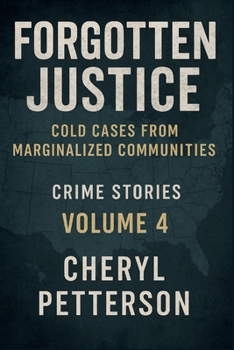
Forgotten Justice: Cold Cases from Marginalized Communities

Volume 4: "Forgotten Justice" - Cold Cases from Marginalized Communities
In America's invisible geography of justice, your zip code, skin color, and social status can determine whether your killer ever sees a courtroom. Volume 4 of "The Silenced" exposes five chilling cases where systematic prejudice created hunting grounds for predators who understood that certain lives could be taken without consequence.
From the windswept isolation of Pine Ridge Reservation, where a tribal police officer hunted Native American women for five years, to the cultural shadows of San Francisco's Chinatown, where organized crime eliminated witnesses under cover of "tong warfare"-each case reveals how institutional bias enables systematic murder.
In East Cleveland, a paramedic targeted society's "disposable" population, knowing their deaths would be dismissed as inevitable. In California's Central Valley, labor contractors buried undocumented farmworkers who harvested America's food. In a Wisconsin nursing home, an administrator implemented ethnic cleansing disguised as compassionate care.
Seventy-eight victims. Five years of killing. Multiple jurisdictions that failed to connect the dots because they never looked for patterns when the dead came from communities that didn't matter.
Written in the tradition of Michelle McNamara and David Grann, "Forgotten Justice" combines meticulous investigative journalism with literary narrative to honor victims while exposing the systematic failures that enabled their deaths. Through unprecedented access to federal case files, crime scene evidence, and interviews with investigators, families, and survivors, this volume reveals how marginalization creates vulnerability to violence when institutions fail to provide equal protection.
More than true crime, this is an unflinching examination of how prejudice becomes deadly-and how dedicated investigators, community advocates, and federal intervention can restore justice when local systems fail. The book includes comprehensive resources for reporting civil rights violations and supporting marginalized communities vulnerable to systematic targeting.
The geography of justice can be redrawn. But only if we have the courage to acknowledge the map we've created-and the will to change it.
"A devastating expos of how institutional bias enables systematic murder in America's forgotten communities. Essential reading for understanding how prejudice kills."
Customer Reviews
ThriftBooks ® and the ThriftBooks ® logo are registered trademarks of Thrift Books Global, LLC
