


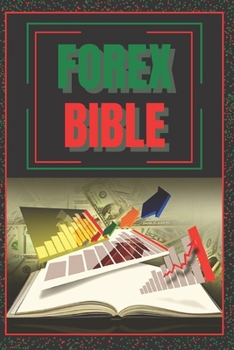
Forex Bible: SUPER POWERFUL GUIDE to becoming a FOREX expert!
No Customer Reviews

FOREX HISTORYWhen foreign trade began, it was not an international trade market. This follows from the Bretton Woods agreement of 1944, which established that foreign currencies would be pegged to the dollar, which was valued at $35 per ounce of gold. This precedent was first put into practice in 1967, when a Chicago bank refused to finance a loan to a teacher in pounds sterling. Of course, his intention was to sell the currency, which in his opinion had too high a price against the dollar, and then buy it back when the value had gone down, making a quick profit.After 1971, when the dollar was no longer convertible into gold and the domestic market was stronger, the Bretton Woods agreement was abandoned, and the currency conversion process became more variable. This allowed for greater support in foreign markets, and the United States and Europe began a strong trading relationship. In the 1980s, market hours and usage expanded through the use of computers and technology to include Asian time zones as well. At that time, foreign exchange amounted to about $70 billion a day. Today, some twenty years later, the level of trade has skyrocketed, with trade amounting to about $1.5 trillion a day.Originally, trading across international lines was more difficult, with several different currencies involved throughout Europe. Although the main players in the European market were deeply involved and veterans of international trade at the time other markets joined, there were more currencies to track - the franc, pound, lira and many more - than was reasonable. With the birth of the European Union in 1992, the foundations were put in place to create a single currency to be used in most of Europe, and the euro was finally established and put into circulation in 1999.FOREX TODAYAlthough some countries have not yet accepted the currency as their own (such as Great Britain, which still uses the pound sterling), the currency conversion process has been simplified without the large number of various currencies that were previously dealt with. Instead of dozens of currencies, the major countries trade in five: US dollars, Australian dollars, pounds sterling, the euro and the Japanese yen.Today, the foreign exchange market is international and global. The market is open 24 hours a day, 5 days a week, to accommodate all major players' time zones. These now include most of Europe, the United States and Asian markets, especially Japan. Even Australia has joined the international trading markets, and since such nations are on the other side of the world from some of the other major players, time zones obviously must be taken into consideration.Another completely separate but perhaps more important concern with Forex trading is understanding how trading in multiple currencies works. How can the value of a stock be compared across international lines if values are expressed in two separate and non-equivalent currencies? And how are gains and losses measured when the conversion rate is constantly changing?Good reading FREE MINDS
Format:Paperback
Language:English
ISBN:1653487488
ISBN13:9781653487486
Release Date:December 2019
Publisher:Independently Published
Length:108 Pages
Weight:0.34 lbs.
Dimensions:0.2" x 6.0" x 9.0"
Customer Reviews
0 rating
Copyright © 2026 Thriftbooks.com Terms of Use
| Privacy Policy | Do Not
Sell/Share My Personal Information | Cookie Policy | Cookie Preferences | Accessibility Statement
ThriftBooks® and the ThriftBooks® logo are registered trademarks of Thrift Books Global, LLC
ThriftBooks® and the ThriftBooks® logo are registered trademarks of Thrift Books Global, LLC
