


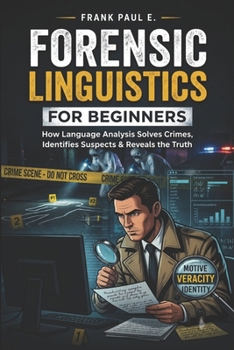
Forensic Linguistics for Beginners: How Criminals Leave Fingerprints in Their Words - A Practical Guide to Authorship, Anonymous Messages, Deepfakes,

Can you tell who wrote an anonymous message without ever seeing the name?
Every threat, ransom note, anonymous email, fake review, or suspicious message leaves traces.
Not fingerprints.
Words.
Punctuation, vocabulary, sentence structure, spelling, rhythm, and tiny habits that writers repeat without realizing it. Forensic linguists learn to recognize those patterns. In this book, you will learn how they work.
Written for absolute beginners, with no background in law, linguistics, or criminology required, Forensic Linguistics for Beginners turns a fascinating forensic discipline into a practical, case-driven guide.
From anonymous messages and ransom notes to social media, Telegram, recorded voices, AI-generated text, and deepfakes, you will discover how investigators use language as evidence, what linguistic analysis can reveal, and where its limits begin.
INSIDE EVERY CHAPTER
Case Study: see the method applied to a concrete investigationTry It Yourself: practice the techniques as you learn themExpert Tip: understand how professionals approach linguistic evidenceCommon Mistake: avoid the errors beginners frequently makeAI Corner: explore how artificial intelligence is changing the fieldField Note: remember the key concept before moving onYOU'LL LEARN HOW TO
Identify linguistic habits that may distinguish one writer from anotherCompare two texts and assess whether they may have a common authorAnalyze threats and anonymous communicationsExamine messages from social media, chats, emails, and recordingsUnderstand authorship analysis and stylometryRecognize linguistic evidence in criminal investigationsUnderstand why no tool can reliably identify AI-written text in every caseSeparate useful forensic evidence from speculationThe book also examines four real, documented cases involving Derek Bentley, the Unabomber, Danielle Jones, and Jenny Nicholl, showing how the analysis of language contributed to investigations and legal proceedings.
A bonus chapter explores the century-old "cut-up" technique associated with classic ransom notes and explains why criminals sometimes leave more behind in their words than they intended.
If you are interested in true crime, criminology, forensic science, criminal investigation, or the hidden power of language, this is your starting point.
The name may be missing.
The linguistic fingerprint may not be.
Start reading. Learn how investigators read between the words.
Related Subjects
LawCustomer Reviews
ThriftBooks ® and the ThriftBooks ® logo are registered trademarks of Thrift Books Global, LLC
