


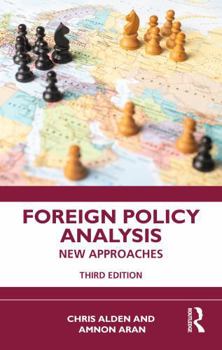
Foreign Policy Analysis: New Approaches

This new edition of Foreign Policy Analysis: New Approaches explores classic concepts involving actors and decision-making, bureaucratic politics, and the domestic sources of foreign policy, alongside 'new approaches' including examples from the Global South and new chapters on feminist and environmental foreign policy.
Russia's invasion of Ukraine, US threats to its allies and outbreak of war in the middle east stand in stark contrast to the relative stability experienced in international system over previous decades. Alongside the return of great power-fuelled conflict, we have the fractured response of businesses, civil society, and international organisations towards global health problems and environmental threats, underscoring the multiplicity of challenges foreign policy makers face. At the same time, changes in the international system such as the US adopting an 'America First' approach, require students of foreign policy to re-examine how the shifting structural dimensions of international order may present not only obstacles to cooperation but also opportunities to innovate. These far-reaching changes challenge Foreign Policy Analysis (FPA) scholars to rethink key conceptual approaches, including the role of leadership, institutions, regime type, and societal factors in shaping decision making. Processes of de-globalisation and growth in plurilateral cooperation concurrently with deepening geopolitical rivalries, intensify the importance of regional 'middle powers', multinational corporations, and social movements.
This book reflects this changing international environment. It is written for scholars and students of FPA, International Relations and Political Science as well as the policy practitioner community, and anyone engaging with contemporary issues and their impact on foreign policy.
Customer Reviews
ThriftBooks ® and the ThriftBooks ® logo are registered trademarks of Thrift Books Global, LLC
