


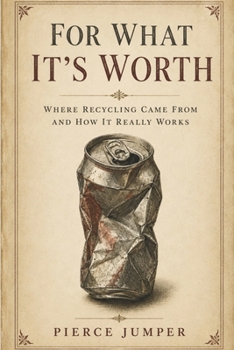
For What It's Worth: Where Recycling Came From And How it Really Works

Everything you were taught about recycling is only half the story.
Most books about recycling want you to feel something - guilty, hopeful, alarmed. This one wants something rarer: for you to understand what's actually true.
For What It's Worth traces the real history of recycling across three thousand years - from Bronze Age metalworkers and Roman builders to Victorian London's "dust-yards," the salvage drives of two world wars, the birth of the famous recycling symbol in 1970, the wandering garbage barge that kicked off the modern recycling boom, and the day in 2018 when China stopped accepting the world's waste and broke the system overnight.
Along the way it answers the questions curious readers actually ask: Where does it all really go? Why does aluminum recycle beautifully while plastic barely recycles at all? Who decided you should feel responsible for the trash - and is that fair? And the big one: does recycling even work?
On that last question - and the other genuinely unsettled ones - the book does something unusual. It lays out the strongest case on each side, names who argues what, and then stops, handing the judgment to the reader. No slogans. No villains. No telling you what to think.
Written in clear, fact-grounded prose for readers aged 11 to 14 (and the adults who end up borrowing it), For What It's Worth treats young people as capable thinkers who deserve the whole story. It's a history, a science explainer, and a quiet lesson in weighing evidence - disguised as a book about garbage.
By the last page, you'll know more about this small, strange, surprisingly important subject than almost anyone you know. What you decide to make of it is entirely up to you.
Related Subjects
NatureCustomer Reviews
ThriftBooks ® and the ThriftBooks ® logo are registered trademarks of Thrift Books Global, LLC
