


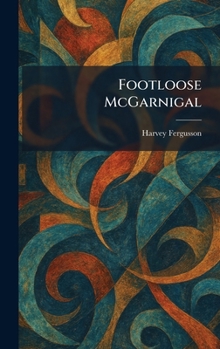
Footloose McGarnigal

"Footloose McGarnigal" is a compelling narrative of wanderlust and the search for authentic experience in the early 20th century. The story follows Alec McGarnigal, a young man disillusioned by the stifling atmosphere of his office job in New York City. Driven by a desire for a life of greater freedom and vitality, he abandons his urban existence and heads toward the vast landscapes of the American Southwest.
As McGarnigal travels through the rugged terrain of New Mexico, he encounters a diverse array of characters, from hardened outdoorsmen to bohemian artists. His journey is more than a physical trek across the country; it is a profound exploration of identity and the conflict between societal expectations and the primal urge for independence. Harvey Fergusson's prose vividly captures the transition of the West from a wild frontier into a more modern society, providing a rich backdrop for Alec's personal transformation.
Through its evocative descriptions of the wilderness and its insightful portrayal of a restless spirit, "Footloose McGarnigal" stands as a significant work of Western literature. It offers readers a timeless look at the universal human desire to break free from the mundane and find one's place in the natural world.
This work has been selected by scholars as being culturally important, and is part of the knowledge base of civilization as we know it. This work was reproduced from the original artifact, and remains as true to the original work as possible. Therefore, you may see the original copyright references, library stamps (as most of these works have been housed in our most important libraries around the world), and other notations in the work.
This work is in the public domain in the United States of America, and possibly other nations. Within the United States, you may freely copy and distribute this work, as no entity (individual or corporate) has a copyright on the body of the work.
As a reproduction of a historical artifact, this work may contain missing or blurred pages, poor pictures, errant marks, etc. Scholars believe, and we concur, that this work is important enough to be preserved, reproduced, and made generally available to the public. We appreciate your support of the preservation process, and thank you for being an important part of keeping this knowledge alive and relevant.
Customer Reviews
ThriftBooks ® and the ThriftBooks ® logo are registered trademarks of Thrift Books Global, LLC
