


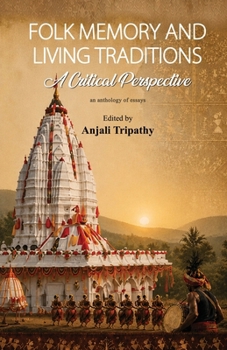
Folk Memory and Living Traditions: A Critical Perspective

Western Odisha in India is far more than a physical landscape shaped by rivers, forests, and fertile settlements. It unfolds instead as a living cultural terrain dense with memory, ritual practice, music, labour, and the shared imagination of its people. Every village path, seasonal celebration, and oral performance carries the imprint of generations who have shaped meaning through collective experience rather than written record. The region's folk traditions-its oral epics, vibrant festivals, distinctive textiles, resonant musical forms, performative
rituals, mythic narratives, and stories of migration and loss-form a dynamic archive of life as it is remembered, felt, and continually re-created. This archive refuses silence and resists erasure, sustaining voices that formal histories often overlook.
Within these traditions, history does not reside solely in documents, nor is identity confined to administrative labels or political boundaries. Instead, both are expressed through living forms: the cadence of song, the rhythm of work, the symbolism of ritual gesture, the choreography of performance, and the cyclical return of seasonal observances. Culture here is not static heritage but an ongoing act of remembrance and renewal. Western Odisha, thus, emerges not simply as a place on the map, but as a resonant cultural world where memory speaks, community performs, and identity is continually shaped in sound, movement, and shared time.
This edited volume seeks to explore that cultural world. Bringing together interdisciplinary scholarship on oral narrative, ethnopoetics, semiotics, ritual studies, performance theory, myth criticism, film analysis, and memory studies, the essays in this collection illuminate the dynamic cultural processes through which the communities of Western Odisha remember, interpret, and renew their world. The chapters collectively argue that folk culture here is neither static nor peripheral; it is an active epistemology-a way of knowing, feeling, and belonging that sustains ecological ethics, social cohesion, and moral imagination across generations.
Customer Reviews
ThriftBooks ® and the ThriftBooks ® logo are registered trademarks of Thrift Books Global, LLC
