


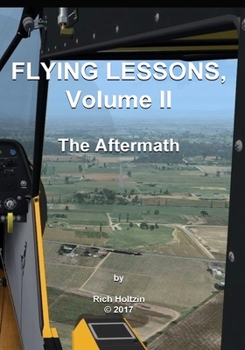
Flying Lessons, Volume II

"Flying Lessons" and its introspective chronicle are philosophically woven and spiritually based. Possibly, Robert Pirsig's novel, "Zen and the Art of Motorcycle Maintenance" is somewhat of a close parallel to Lux's fable. However, both novels are contemplative personal and spiritual sojourns using two different modes of transportation to tell the story. Moreover, "Flying Lessons" is not about an inquiry into values and the quality of metaphysics, which describes the import of Pirsig's novel. By contrast, Lux's transpersonal odyssey throughout the novel is rooted in temporality, as well as ethereal aspects of life's process and reality. Ergo, describing his struggle and idiosyncratic absolution that comes with the high price of Lux's quest for personal freedom (i.e., his search for the meaning of life). Ultimately, he finds freedom but will forever question what it took to find it. This multifaceted novel is indeed replete with philosophical and spiritual musings (as conveyed by Lux), both Eastern and Western. The human interest aspect evolves from three lives that were once harmonious, yet altered, in time, by human tragedy and dysfunction before Lux reluctantly left Denver to meet the proverbial Buddha on the Road. In this case, an eventual realization that there is no Buddha on the road because enlightenment always comes from within the individual. As for the title of this two-volume novel, the implication entails an intentional play on words based on the literal meaning. Thus, a portentous odyssey of two pilots and friends that begins after an equally portentous crash.
(766-pages 7 x 10 format and 754 pages Vol. II)
Customer Reviews
ThriftBooks ® and the ThriftBooks ® logo are registered trademarks of Thrift Books Global, LLC
