


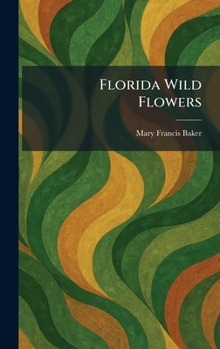
Florida Wild Flowers

"Florida Wild Flowers" is a comprehensive and beautifully detailed guide to the diverse botanical life found across the Sunshine State. Authored by Mary Francis Baker, this work serves as an essential resource for nature enthusiasts, botanists, and gardeners interested in the unique ecosystems of Florida. The book provides clear descriptions and classifications of numerous wildflower species, ranging from the coastal dunes to the inland wetlands and forests.
Baker's approach combines scientific accuracy with an accessible narrative, making the identification of native flora both informative and engaging. As a significant early 20th-century botanical study, the work captures the rich biodiversity of the region before extensive urbanization, offering a valuable historical perspective on Florida's natural heritage. Readers will discover a wide array of plants, including rare endemics and common meadow flowers, all meticulously documented.
Whether used as a field guide or a reference for historical botanical studies, "Florida Wild Flowers" remains a foundational text in Southern botany. Its focus on the aesthetic and biological importance of Florida's plant life continues to inspire conservation efforts and a deeper appreciation for the natural world.
This work has been selected by scholars as being culturally important, and is part of the knowledge base of civilization as we know it. This work was reproduced from the original artifact, and remains as true to the original work as possible. Therefore, you may see the original copyright references, library stamps (as most of these works have been housed in our most important libraries around the world), and other notations in the work.
This work is in the public domain in the United States of America, and possibly other nations. Within the United States, you may freely copy and distribute this work, as no entity (individual or corporate) has a copyright on the body of the work.
As a reproduction of a historical artifact, this work may contain missing or blurred pages, poor pictures, errant marks, etc. Scholars believe, and we concur, that this work is important enough to be preserved, reproduced, and made generally available to the public. We appreciate your support of the preservation process, and thank you for being an important part of keeping this knowledge alive and relevant.
Customer Reviews
ThriftBooks ® and the ThriftBooks ® logo are registered trademarks of Thrift Books Global, LLC
