


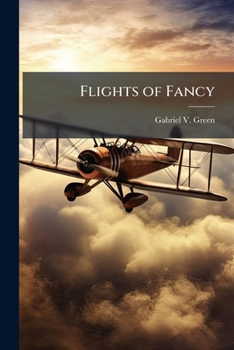
Flights of Fancy: Developing Exotic Military Aircraft

The world has changed dramatically since the Cold War ended. Instead of a standoff with the Soviet Union, the United States now faces an uncertain international environment and the new realities of the long war on terrorism. A nebulous threat, constrained resources, and lengthy acquisition cycles demand wise choices by military decision makers. How best to use air and space power in this new world environment is an ever-present challenge for military planners as they prepare for current and future operations.The purpose of this thesis is to determine how military planners might use current theories, models, and schools of thought dealing with military innovation to determine whether the US will field a workable weapon-system. In order to reduce some of the ambiguity in this process, this thesis identifies pertinent trends in weapon system development so that decision makers can make educated choices. An examination of relevant case studies consisting of one successful and one unsuccessful weapon-system from the US (F-117 and XB-70) and Germany (Me 262 and Me 163) from a perspective of military innovation theories and schools of thought provides a baseline to search for potential linkages present in successful and unsuccessful aircraft programs.
This work has been selected by scholars as being culturally important, and is part of the knowledge base of civilization as we know it. This work was reproduced from the original artifact, and remains as true to the original work as possible. Therefore, you will see the original copyright references, library stamps (as most of these works have been housed in our most important libraries around the world), and other notations in the work.
This work is in the public domain in the United States of America, and possibly other nations. Within the United States, you may freely copy and distribute this work, as no entity (individual or corporate) has a copyright on the body of the work.
As a reproduction of a historical artifact, this work may contain missing or blurred pages, poor pictures, errant marks, etc. Scholars believe, and we concur, that this work is important enough to be preserved, reproduced, and made generally available to the public. We appreciate your support of the preservation process, and thank you for being an important part of keeping this knowledge alive and relevant.
Customer Reviews
ThriftBooks® and the ThriftBooks® logo are registered trademarks of Thrift Books Global, LLC
