


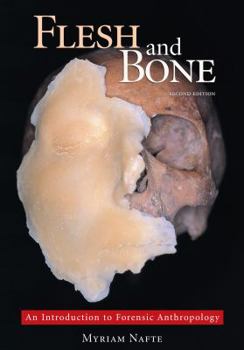
Flesh and Bone: An Introduction to Forensic Anthropology

Select Format
Select Condition 
Book Overview
Revised
Format:Hardcover
Language:English
ISBN:1594603006
ISBN13:9781594603006
Release Date:January 2009
Publisher:Carolina Academic Press
Length:202 Pages
Weight:0.95 lbs.
Dimensions:0.6" x 7.1" x 10.2"
Customer Reviews
5 ratings
Great starter book
Published by Thriftbooks.com User , 19 years ago
This book is a really great introduction to anthropology and forensic anthropology. Highly reccommended.
A Solid, Informative Book
Published by Thriftbooks.com User , 24 years ago
Flesh and Bone was required reading for my course in forensic anthropology. I found it very informative and interesting. I like how many of the legal terms were translated. The book has inspired me to pursue this field of study even further. I recommend it to students who are nervous about the sciences and cannot get through alot of technical terminology, and for those who are curious about crime scene investigation. The pictures are helpful even though some are quite graphic.
A Compelling Read!
Published by Thriftbooks.com User , 25 years ago
Flesh and Bone by Myriam NafteAs a curious and somewhat eclectic reader, I was quite taken with the cover and title of this book so I bought it. What a compelling read!For someone with no formal background in science, this book presented an interesting and thorough introduction to the topic of forensic anthropology without being too challenging. I found myself drawn back to the book time and again.The first of four sections introduces the context for the book - the definition and development of forensic science. Then, the author moves to anthropology and its sub-disciplines. This provides the backdrop for understanding the context of forensic anthropology. Section two covers the human body. Some of the pictures in the book are a little upsetting to look at, but after a while, they become a little less disturbing. Section three deals with the mysteries to be uncovered through the examination of human remains. This part of the book is fascinating and provides some great examples of actual cases. Differences between male and female skeletons and ages are interesting, as is the whole discussion about what death is and what happens to the body afterward. Section four focuses on the human rights aspect of this type of work. Unfortunately, there have been too many 'for instances' to illustrate when and why this work is so critical lately.It provides a good base from which to follow discussions on criminal matters, read detective stories with a new eye and follow new developments in dating and understanding early historical mysteries such as the illness that supposedly threatened King Tut's family.It is an academic book with many good references and hints for further reading as well as ideas on interesting collections to visit on your travels! All in all, a great book to add to your library.
Refreshing, Informative, Brilliant
Published by Thriftbooks.com User , 25 years ago
M. Nafte has successfully and brilliantly introduced students and interested readers alike, to the very scientific field of forensic anthropology. It is difficult enough to read through dense scholarly materials, but Professor Nafte has found a way of making forensic anthropology accessible to specialists and non-specialists alike. I highly recommend this book to physical and forensic anthropology students who are beginning in the field, scholars who need generalized data to inform their research, students and employees in the area of criminal justice who regularly encounter materials in the field, police forces, coroners offices, and finally (but not lastly), interested readers. I guarantee their understanding of the difficult and fascinating field of forensics will be greatly enhanced. I look forward to more books from Professor Myriam Nafte.
Great book
Published by Thriftbooks.com User , 25 years ago
I found M.Nafte's book, Flesh and Bone: An Introduction to Forensic Anthropology very informative and helpful. Details and difficult concepts were easy to understand. The author has a good way of explaining scientific terminology and ensures that the reader is not intimidated. The photos are graphic and somewhat disturbing but they are used for educational purposes and not gratuitously. The preface of the book written by the mother of a child who has died under mysterious cirmcumstances and the dedication are especially touching. They illustrate the very humanistic aspect of the book as opposed to it being about hype and entertainment. Are there any other books by this author?
Copyright © 2026 Thriftbooks.com
Terms of Use | Privacy Policy | Do Not Sell/Share My Personal Information | Cookie Policy | Cookie Preferences | Accessibility Statement
ThriftBooks ® and the ThriftBooks ® logo are registered trademarks of Thrift Books Global, LLC
ThriftBooks ® and the ThriftBooks ® logo are registered trademarks of Thrift Books Global, LLC
