


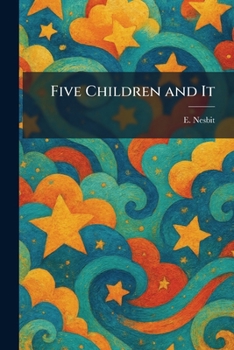
Five Children and It

"Five Children and It" is a beloved classic of children's fantasy that follows the extraordinary adventures of five siblings-Cyril, Anthea, Robert, Jane, and their baby brother-during a summer holiday in the English countryside. While playing in a local gravel pit, the children discover a prehistoric and cantankerous sand-fairy known as a Psammead. This ancient creature has the power to grant one wish each day, with the magical effects lasting only until sunset.
As the children navigate their new reality, they quickly discover that getting exactly what you wish for often leads to unexpected and frequently hilarious consequences. From becoming "beautiful beyond the dreams of avarice" to being besieged in a castle, each wish creates a unique set of challenges that test the children's ingenuity and bond. E. Nesbit's masterful storytelling blends whimsical imagination with a realistic portrayal of childhood dynamics, making "Five Children and It" a cornerstone of modern children's literature. It remains a timeless exploration of the age-old proverb to be careful what you wish for, celebrated for its humor, charm, and enduring insight into the wonders of youth.
This work has been selected by scholars as being culturally important, and is part of the knowledge base of civilization as we know it. This work was reproduced from the original artifact, and remains as true to the original work as possible. Therefore, you may see the original copyright references, library stamps (as most of these works have been housed in our most important libraries around the world), and other notations in the work.
This work is in the public domain in the United States of America, and possibly other nations. Within the United States, you may freely copy and distribute this work, as no entity (individual or corporate) has a copyright on the body of the work.
As a reproduction of a historical artifact, this work may contain missing or blurred pages, poor pictures, errant marks, etc. Scholars believe, and we concur, that this work is important enough to be preserved, reproduced, and made generally available to the public. We appreciate your support of the preservation process, and thank you for being an important part of keeping this knowledge alive and relevant.
Customer Reviews
ThriftBooks ® and the ThriftBooks ® logo are registered trademarks of Thrift Books Global, LLC
